Best Apps to Learn Spanish in 2026, Compared for Speaking
By Primoz, Founder of TalkHabit
Published · Updated · 13 min read
There's no single best Spanish app. The right pick depends on whether you want a free habit, grammar foundations, or actual spoken conversation. Judged by how much speaking each produces, most traditional apps teach recognition first, so a pair of apps works better than one winner. Use a foundations app such as Duolingo, Babbel or Pimsleur for words and grammar. Then add something that makes you speak out loud: an AI conversation app, a tutor or a language exchange.
Experienced learners say the same. In a popular r/Spanish thread on the absolute best apps to learn Spanish, they push back hard on tap-the-word apps for exactly this reason.
Quick comparison
Prices are US prices from each company's own site or US App Store listing, checked on 3 November 2026. They vary by country and change often.
| App | Best for | Speaking-first? | Free option | Paid plans (US, November 2026) |
|---|---|---|---|---|
| Duolingo | A free daily habit | No (recognition) | Yes, the full course | Super and Max; price shown in the app |
| Babbel | Grammar and structure | Partly | First lesson of each course | From $8.95/month on a 12-month plan |
| Pimsleur | Spoken recall on the move | Yes (audio) | 7-day trial | From $14.95/month (audio-only) |
| Langua | AI role plays, plus human tutors | Yes | About 3 min/day of calls | From $19.99/month in the App Store |
| Speak | A speaking-first curriculum | Yes | 7-day trial | $17.99/month or $83.99/year in the App Store |
| Talkpal | Open AI chat on any topic | Yes | 10 min/day of basic chat | $19.99/month in the App Store |
| TalkHabit | A daily five-minute Spanish call | Yes | 5 min/day | $14.99/month or $99.99/year |
| italki | Pay-as-you-go human tutors | Yes (human) | No | From $4 a lesson |
| Preply | Structured tutoring | Yes (human) | Paid trial lesson | From $3, average $17 a lesson |
| HelloTalk / Tandem | Free exchange with real people | Partly | Yes | Optional paid tiers |
TalkHabit is our app. If you want to hear what a five-minute Spanish call feels like, the free plan needs no card.
How this comparison judged each app
This isn't a hands-on test ranking. We haven't run timed tests, so there are no scores. Product facts come from each company's own pages, and we've added what learner communities report. Apps are grouped by type (traditional courses, AI conversation apps, then human options), not ranked. Each one is judged on five points:
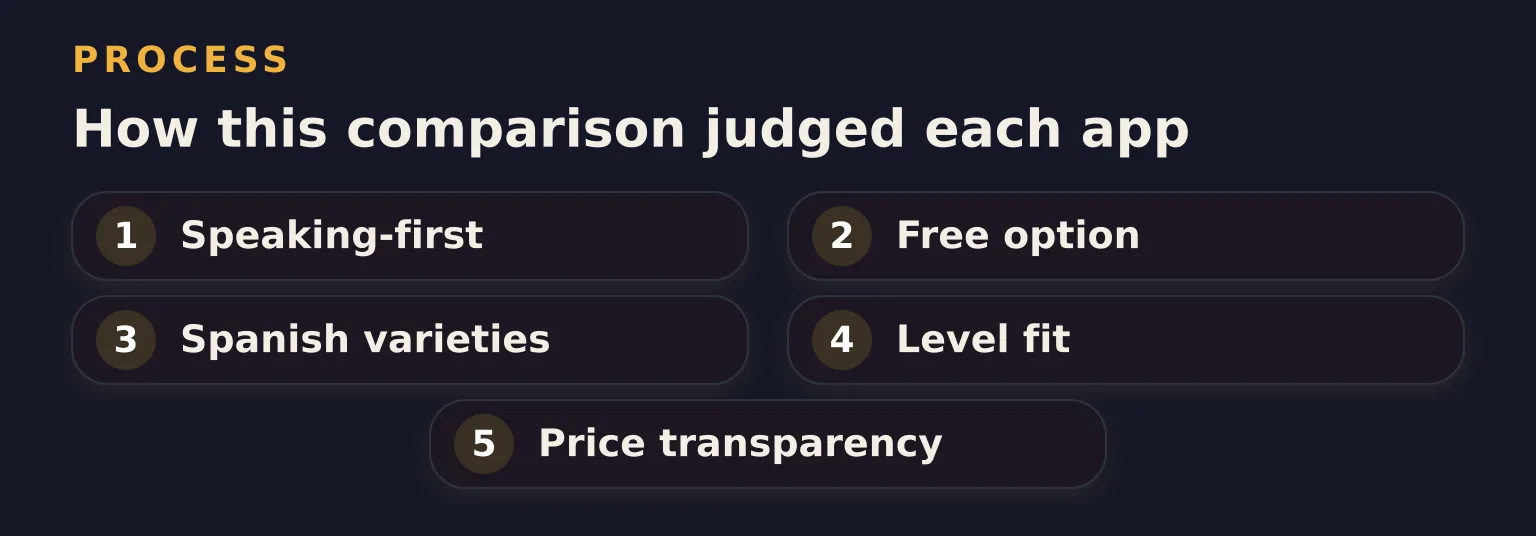
- Speaking-first: does the core mechanic require producing spoken Spanish, or tapping and reading?
- Free option: genuinely free, a limited trial, or paid only?
- Spanish varieties: Latin American, Castilian, or both?
- Level fit: beginner-friendly, or a ceiling for intermediate and advanced learners?
- Price transparency: is current US pricing easy to find?
Most lists cover Duolingo, Babbel and Pimsleur. What they usually underplay is the ceiling. Recognition-based apps plateau: you end up able to read Spanish but freezing when someone asks you a question. That gap is where conversation-focused tools earn their place.
Duolingo: the free habit-builder with a speaking ceiling
Best for: building a free daily habit and covering basic vocabulary.
Duolingo has one of the largest Spanish courses of any app. It's free at its core, and its streaks and bite-sized lessons make it the easiest habit in language learning. For a total beginner, that matters: consistency beats intensity.
The tradeoff is what the lessons ask of you. Most exercises are recognition-based: match, translate, tap. Speaking exercises exist, but they're short and forgiving, and they don't simulate someone responding to what you said. Duolingo's AI conversation features, Roleplay and Video Call, are on its paid plans and work only in the mobile app. If your goal is conversation, Duolingo is a foundation, not a finish line. Many long-streak users hit exactly this wall. Here's what learners say after quitting Duolingo after a long streak, and here are the Spanish gaps that stop you speaking after Duolingo.
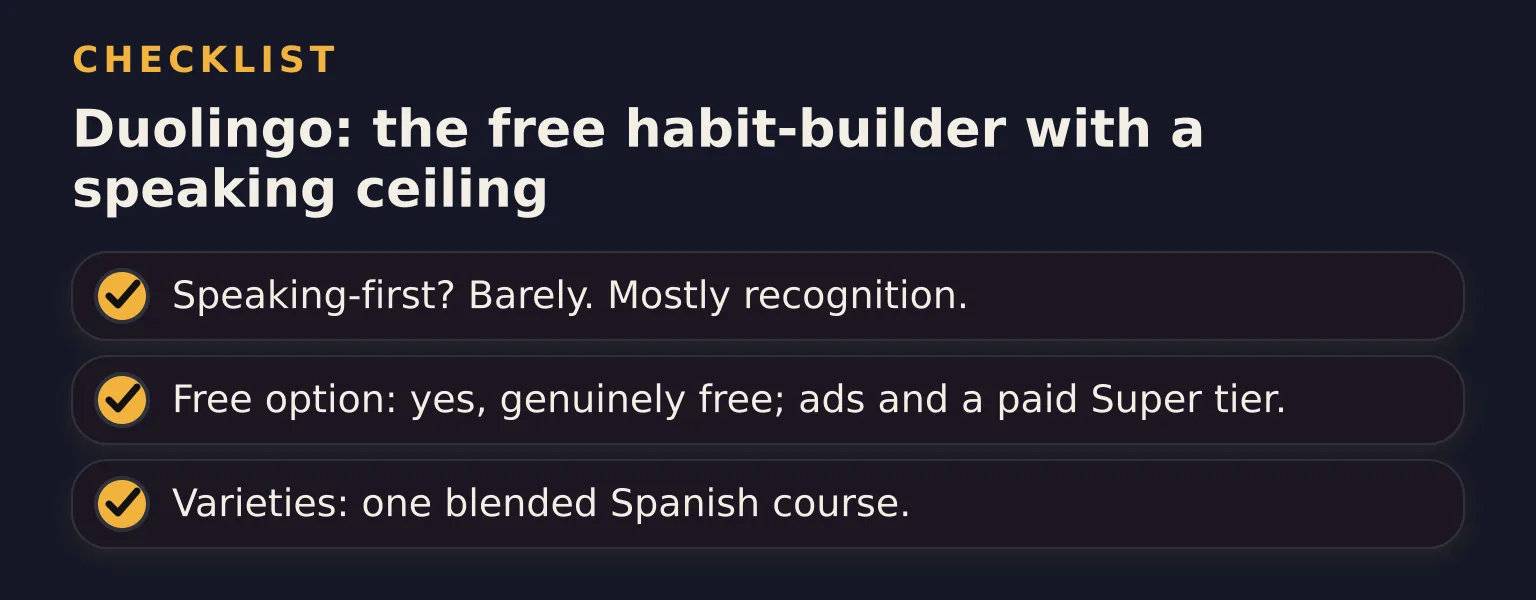
- Speaking-first? Barely. Mostly recognition.
- Free option: yes, genuinely free, with ads and a paid Super tier.
- Varieties: one Spanish course.
Babbel: grammar and structure, once you pay
Best for: learners who want clear grammar explanations and structured courses.
Babbel teaches Spanish more like a well-organised course book. Each lesson explains a grammar point, gives you dialogue practice and builds in sequence. Reviewers consistently name it the strongest traditional app for grammar and sentence structure.
The free option is thin. Babbel says the first lesson of every course is free, with up to 80 free lessons depending on the language. Everything beyond that needs a subscription. In the US in November 2026, plans ran from $17.95 for one month to $8.95 a month on a 12-month plan ($13.45 a month on six months), plus a $299.99 lifetime option. Babbel is also testing an AI conversation partner in its mobile app. Speaking practice is built in, but it's still structured recall, not open conversation.
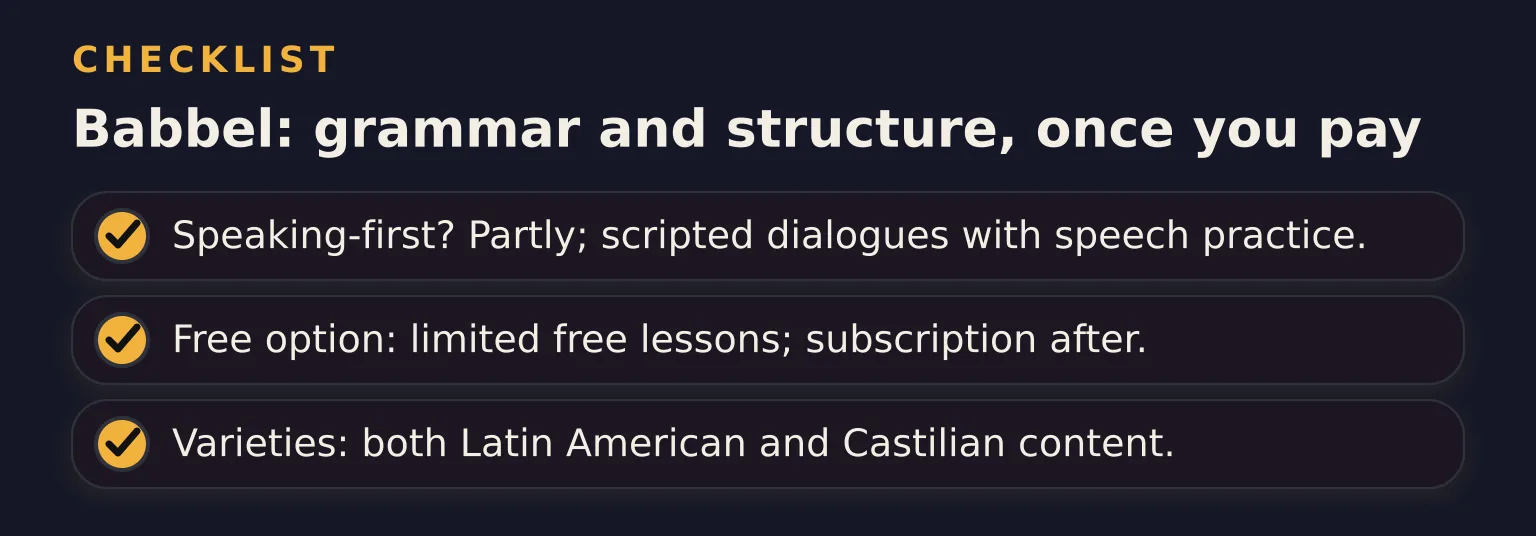
- Speaking-first? Partly: scripted dialogues with speech practice.
- Free option: limited free lessons, then a subscription.
- Varieties: separate European and Mexican Spanish courses.
Pimsleur: audio-first, the closest to speaking among traditional apps
Best for: spoken recall while commuting, walking or driving.
Pimsleur is the odd one out among traditional apps. Its core is 30-minute audio lessons where you're constantly prompted to say words and phrases out loud before you hear the answer. There's nothing to tap. For pure spoken output per minute, it beats Duolingo and Babbel, which is why audio-first learners rate it so highly.
The downsides: it's the least game-like option, and reading practice is secondary. Pimsleur has a 7-day free trial, then subscriptions, or you can buy courses outright and keep them. On pimsleur.com in November 2026, the US audio-only plan was $14.95 a month and Premium $19.95 a month.
- Speaking-first? Yes, audio-first spoken recall.
- Free option: a 7-day trial, then a subscription or a one-time purchase.
- Varieties: separate Latin American and Castilian Spanish courses.
AI conversation apps: talking without a human partner
This category is built around one mechanic: you speak, the AI responds, and you keep the conversation going. For a learner whose goal is conversation, these are the closest app-based match to real practice. For a wider comparison, see our guide to AI language learning apps for speaking.
Langua: AI conversation plus real tutors
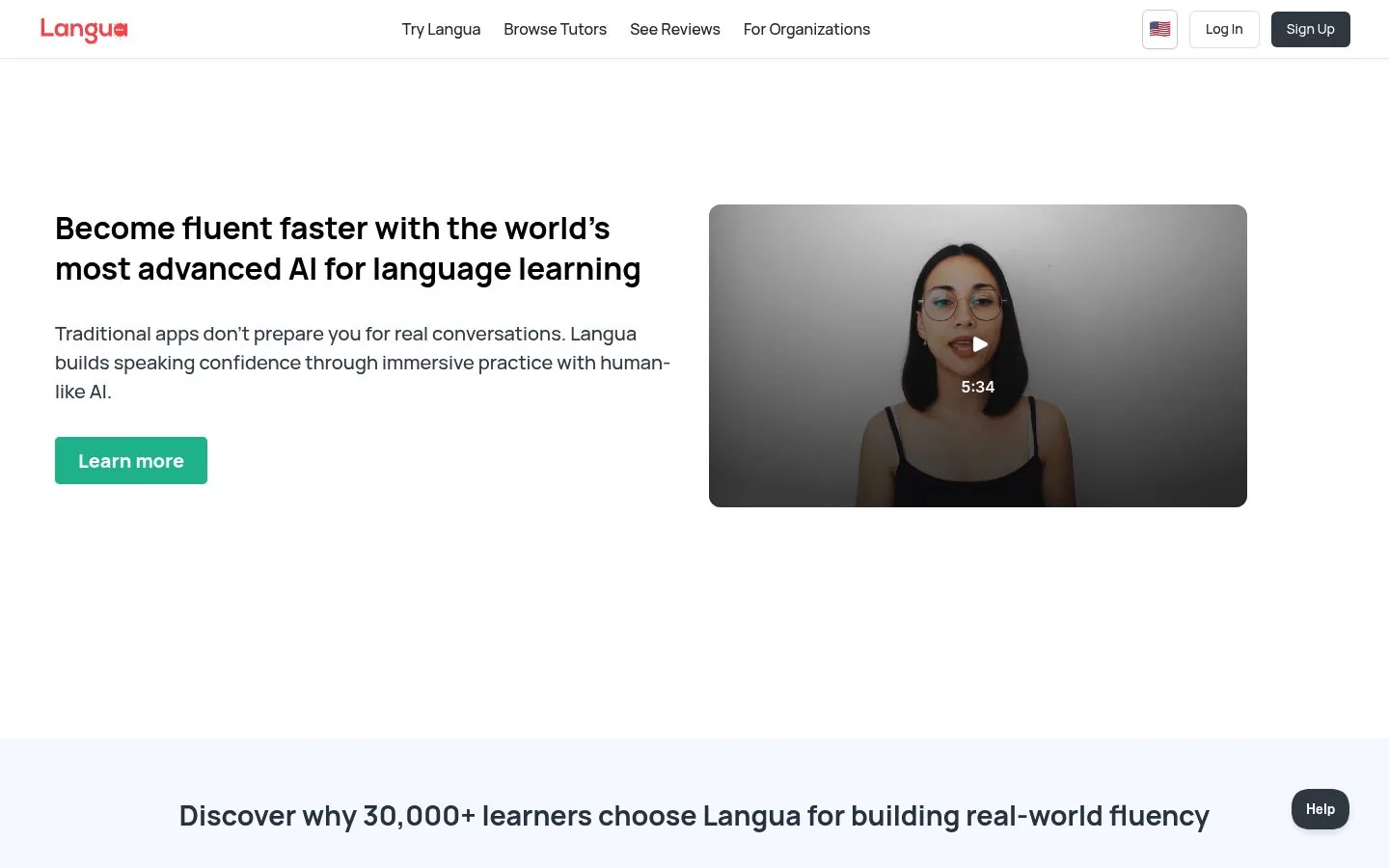
Best for: varied AI role plays, with human tutors as an upgrade.
Langua, from LanguaTalk, offers AI voice conversations: role plays, chats about your interests, and a detailed feedback report afterwards, with voices cloned from real native speakers. LanguaTalk also runs a tutor marketplace, so you can move on to human lessons when you want them.
The tradeoff: the free version is small, about 3 minutes of calls a day, so it isn't a real free option. In the US App Store in November 2026, paid plans started at $19.99 a month.
- Speaking-first? Yes, voice conversation.
- Free option: a small free tier; a subscription for regular use.
- Varieties: Langua offers several dialects for many of its languages.
Speak: speaking-first lessons with AI feedback
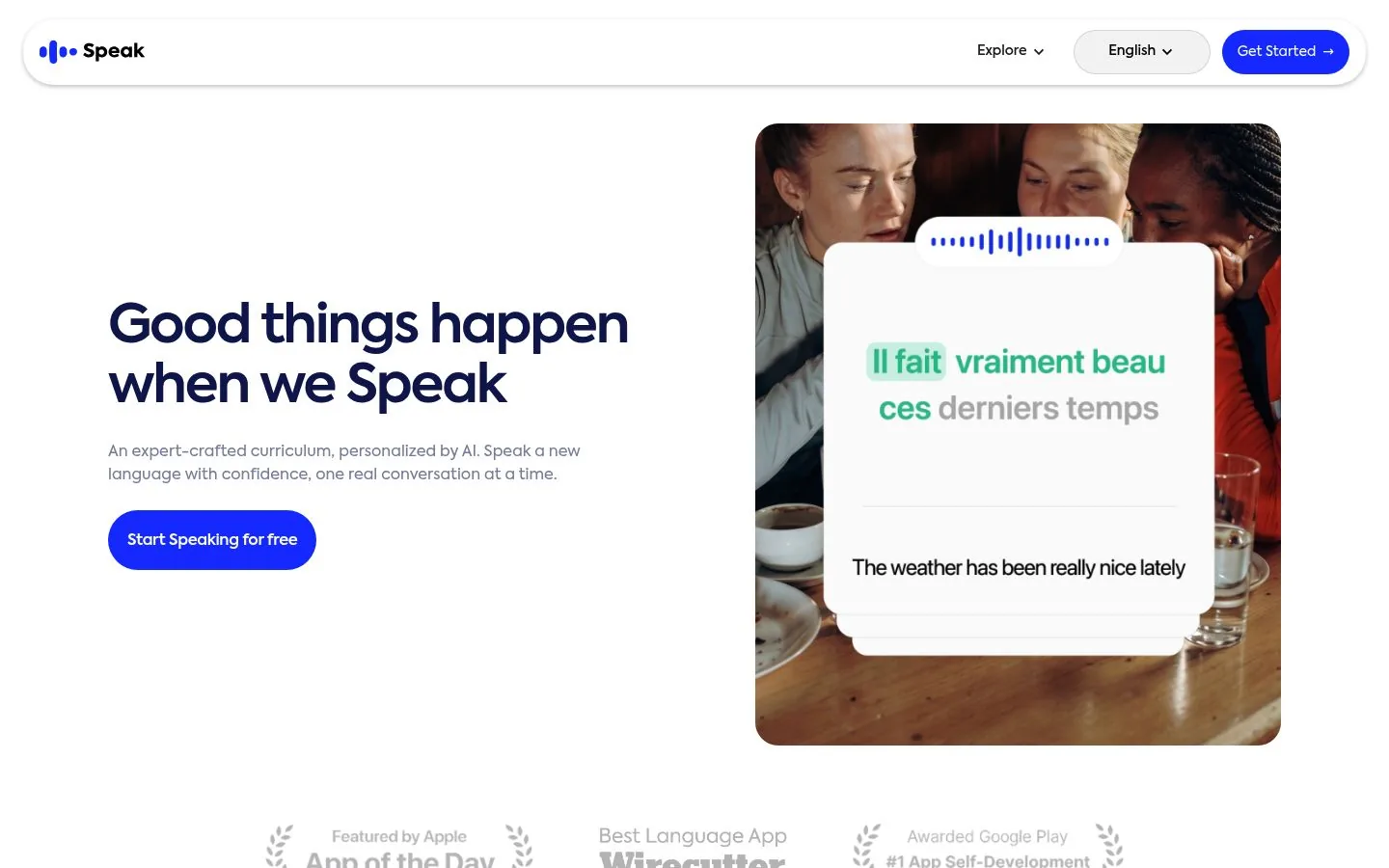
Best for: learners who want a full curriculum built around speaking out loud.
Speak is unusual because its whole method is speaking. You learn the phrases native speakers use, practise them until they're automatic, then use them in conversation with its AI tutor, with real-time feedback on pronunciation and phrasing.
It isn't free beyond a 7-day trial. After that, its US App Store listing shows Premium at $17.99 a month or $83.99 a year (as of November 2026), and Speak says prices vary by region. If you want structure plus speaking and will pay for it, it fits well. If you want something free, look elsewhere. Torn between Speak and the free option? See Duolingo vs Speak.
- Speaking-first? Yes, the whole method.
- Free option: a 7-day trial only.
- Varieties: check which accents it uses before you subscribe.
Talkpal: open-ended AI chat
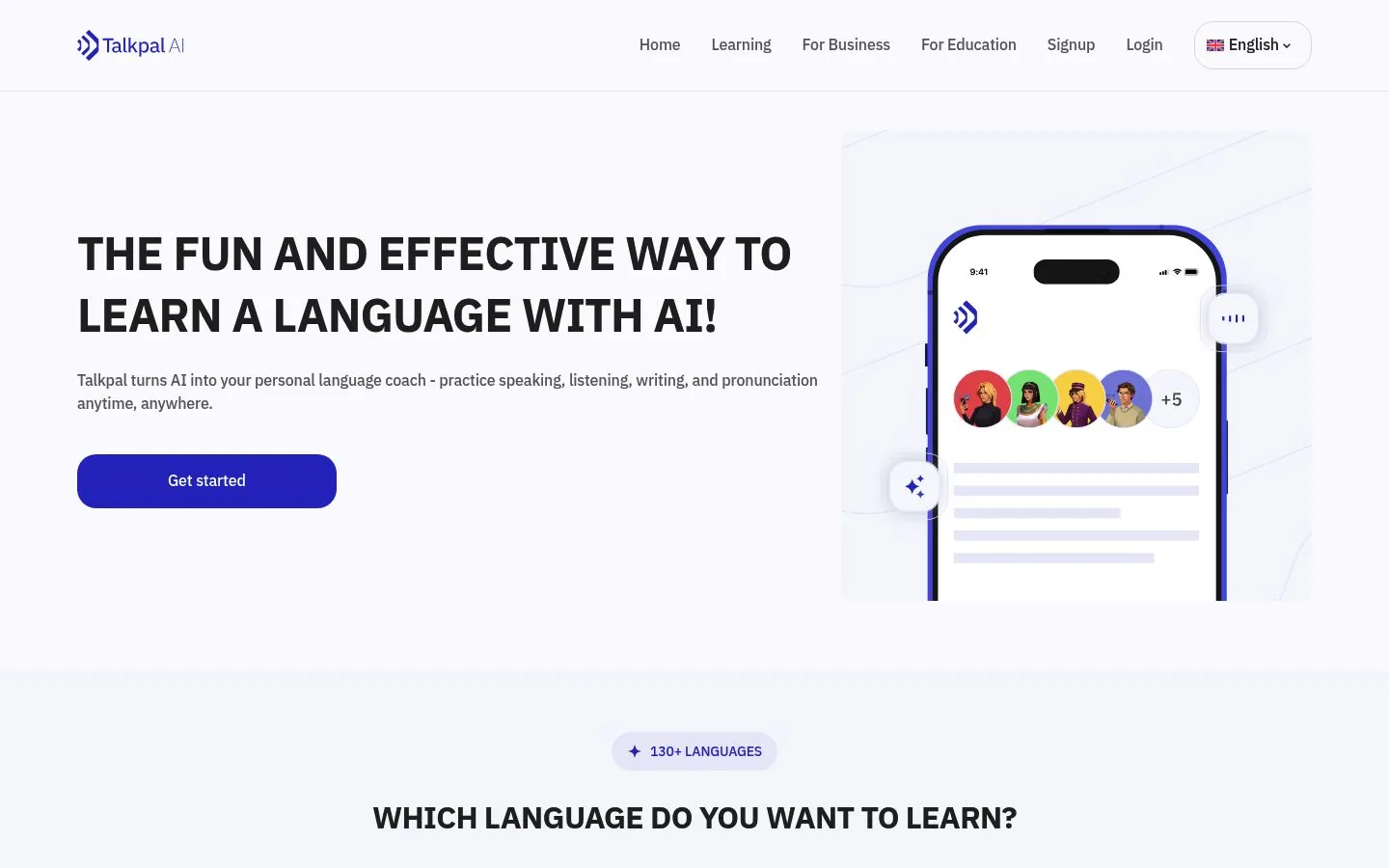
Best for: casual, open-topic speaking practice in short bursts.
Talkpal lets you have voice or text conversations about whatever you like, in Spanish and its 130+ other languages. The freedom is the appeal: no lesson plan, just talk about food, football or your week.
The tradeoff is direction. Open chat with an AI is great once you can already form sentences, but beginners may not know what to practise. Its free Basic plan gives basic chat with a 10-minute daily limit. Premium comes with a 14-day free trial, and the US App Store listed it at $19.99 a month (as of November 2026).
- Speaking-first? Yes, voice-first chat.
- Free option: 10 minutes a day of basic chat, plus a 14-day Premium trial.
TalkHabit: one short Spanish call a day
Best for: a small, repeatable Spanish speaking routine without pressure.
TalkHabit is the app we make, built Spanish-first. Each day you have a short voice call with a personal AI partner, at beginner, intermediate or advanced level. Every call has one grammar focus picked from your recent mistakes, such as ser vs estar, the preterite vs the imperfect, or the subjunctive. The partner steers the conversation so you have to use it, and says your mistakes back the right way as you go. After a call on the web, you see up to five sentences you actually said, next to the corrected version and a one-line reason. You can then shadow those corrections in your partner's voice. The partner remembers your past conversations, so it feels like continuing a conversation rather than restarting a drill.
It's level-adjusted, so you aren't thrown into fluent-speed conversation on day one. Here's how to choose your speaking level. It's free for 5 speaking minutes a day with no card. Plus gives up to 10 minutes a day for $14.99 a month or $99.99 a year (US prices as of November 2026), after a 7-day free trial.
The honest limits: sessions are short by design, even on Plus. The partner chooses the topic, and there's no role-play or scenario picker. It runs in a browser and on Android, and the iPhone app isn't out yet. And it's a focused speaking tool, not a full course: you'll still need vocabulary and grammar input from somewhere, which is why pairing it with a foundations app works.
- Speaking-first? Yes, that's the whole product.
- Free option: 5 minutes a day.
Human options for contrast: tutors and language exchange
Apps aren't the only way to get spoken Spanish. Two human options are worth knowing, if only to set a fair baseline.
italki: pay-as-you-go human tutors
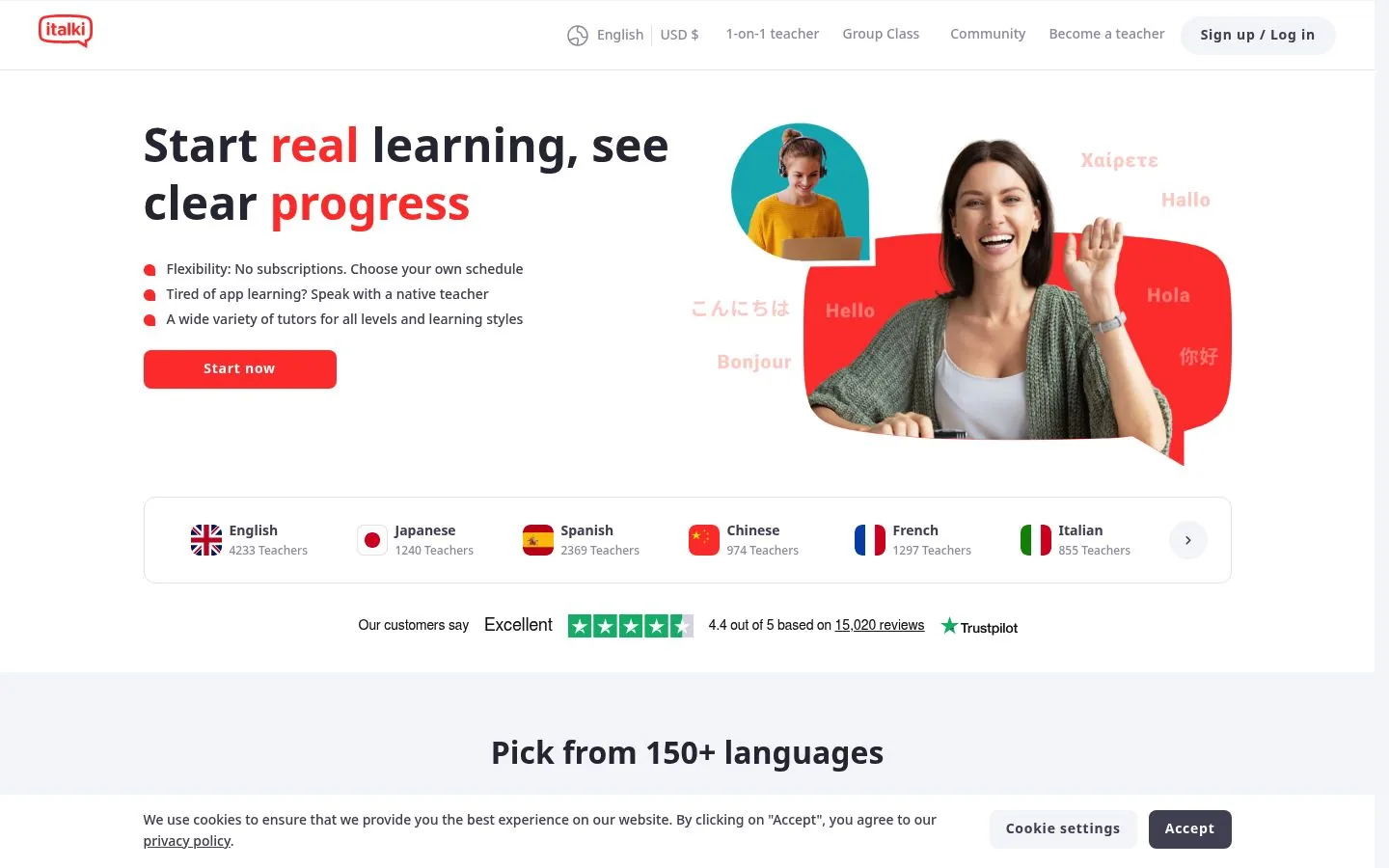
Best for: real conversation with a native speaker when you're ready.
italki is a tutor marketplace with no subscription. You book one-to-one video lessons with teachers who set their own prices, and italki says lessons start from $4 (as of November 2026). Nothing beats a patient human tutor for pushing your speaking. But cost grows with use, and scheduling a real person is a bigger commitment than opening an app.
Preply: tutor lessons with a plan
Best for: learners who want structured tutoring.
Preply is similar. In November 2026, its Spanish tutors page said classes start from $3, with an average of $17. Each tutor sets their own rate, so check the profile. It's great once you commit to a schedule, but heavier than an app for daily practice.
HelloTalk and Tandem: free exchange with real people
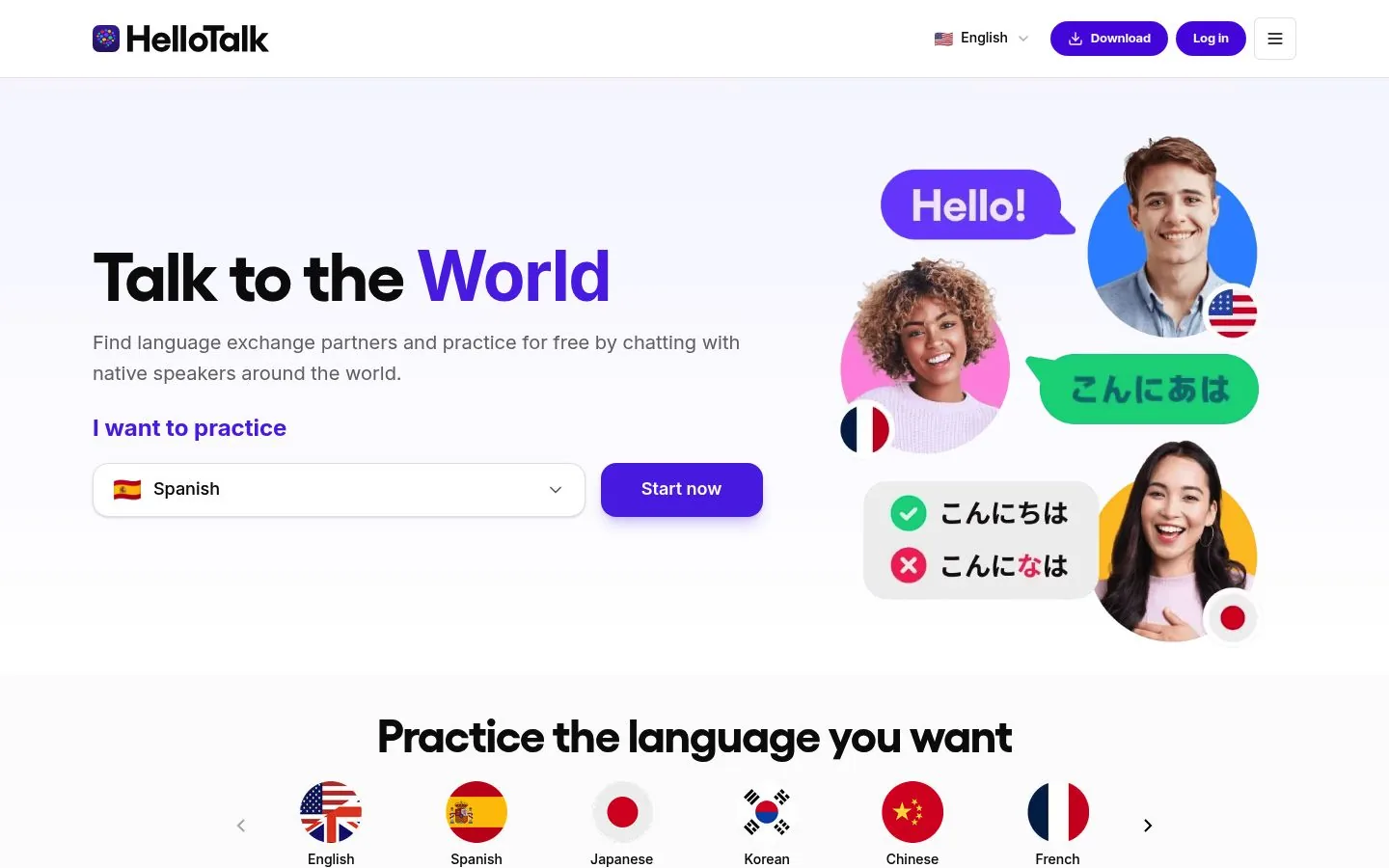
Best for: free speaking practice with a social twist.
HelloTalk matches you with native Spanish speakers who are learning your language. Text, voice and video exchange are free, with built-in corrections, and its voice and video calls have no time limit. Tandem works on the same exchange idea, and its free tier includes audio and video calls. Both are genuinely free at the core, and real people respond in ways no AI can. The tradeoff: it's unstructured, the pace depends on your partners, and shyer learners often stall at text chat. If that sounds like you, read about Spanish conversation practice without a partner.
Free-tier reality check
"Free" means three different things here, and the difference decides what is actually usable:
- Free and ongoing: Duolingo (with ads), HelloTalk and Tandem (core exchange), Talkpal (10 minutes a day of basic chat) and TalkHabit (5 minutes a day).
- A free lesson or trial, then paid: Babbel (first lessons), Pimsleur (7 days), Speak (7 days).
- A small free taster: Langua (about 3 minutes of calls a day).
- Paid per lesson: italki and Preply.
If free is the deciding factor, start with the first group. If you're willing to pay, spend the money on the thing free apps do worst: conversation.
The recommended stack: a foundations app plus a speaking tool
The clearest verdict from comparing these side by side: don't ask which single app is best. Pick one from each column.
Column 1, foundations (10 minutes): Duolingo if you want free, Babbel or Pimsleur if you'll pay for structure. This gives you new words and grammar to say.
Column 2, speaking (5 to 10 minutes): an AI conversation app (Talkpal, TalkHabit, Langua or Speak, depending on budget and structure), or HelloTalk when you're ready for real people.
A simple week looks like this. In the morning, one foundations lesson for input. In the evening, five minutes of spoken conversation for output. Twice a week, swap the AI session for a language-exchange chat. Put it in your calendar with a fixed trigger time, and use our five-minute daily speaking routine so the habit survives week two. Then turn it into real practice with these six ways to practise speaking Spanish every day.
If you want to get more out of AI conversations before choosing, this guide on using an AI chatbot for language learning covers how to make them count.
Ready to try the speaking half? Create a free TalkHabit account and have your first Spanish conversation today. The free plan gives you five minutes a day, which is enough for a first session.