Speaking Lessons for Adults: Options, Costs and What Works
By Primoz, Founder of TalkHabit
Published · Updated · 12 min read
Speaking lessons for adults come in six main formats: private tutors, conversation coaching, group classes, language exchange, drill apps and AI conversation partners. They differ less in price than in how much you actually speak per session and how much pressure you feel. For most adults, the honest answer is a combination: one live option you can afford, plus daily low-pressure practice in between.
Every price below is a US price from the provider's own site, checked on 3 November 2026. Several of these sites show prices in your local currency, and all of them change, so treat the figures as a starting budget, not a quote.
What counts as a speaking lesson for adults
"Speaking lessons for adults" covers a wider range than most people expect. Before comparing costs, it helps to separate the formats, because they solve different problems:
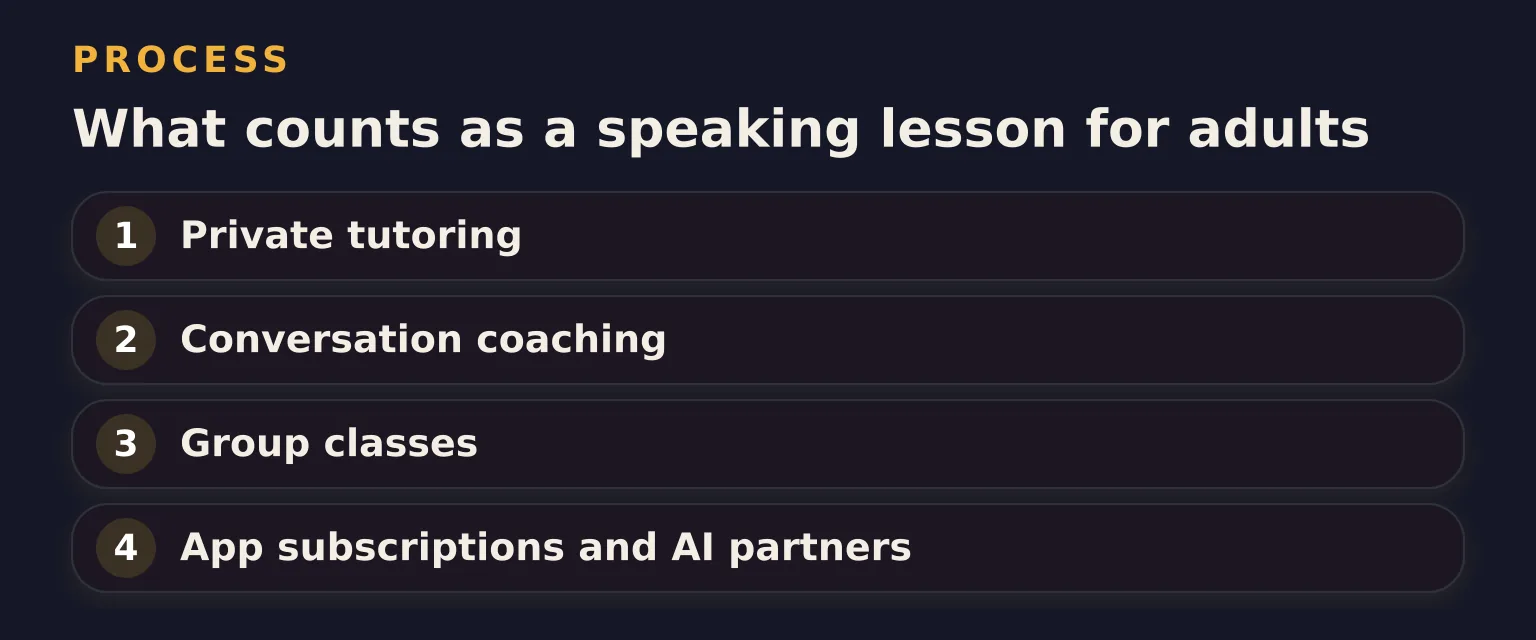
- Private tutoring: one person, one lesson, focused on you.
- Conversation coaching: a specialist who works on delivery, confidence and fluency habits rather than textbook grammar.
- Group classes: a teacher plus a few classmates on a fixed schedule.
- App subscriptions and AI partners: daily self-serve practice, from pronunciation drills to full voice conversations.
A useful rule as you read: a live hour is not an hour of you speaking. In a group class of five, you might get ten minutes of actual airtime. Alone with an AI partner, nearly the whole session is your voice. That single difference changes what each option is worth per dollar.
Here's the comparison in one view. The speaking-time column is our rough estimate, not a measurement.
| Format | Typical cost (US, November 2026) | Your speaking time (rough estimate) | Best for |
|---|---|---|---|
| Private tutor | From $4 a lesson on italki; $15 to $50 an hour on Preply (English) | roughly 20 to 30 minutes per hour | steady progress with human feedback |
| Conversation coach | No standard rate; each coach sets their own | most of the session is about your speech | fluency and delivery plateaus |
| Group class | $6.99 to $13.99 per class on Lingoda | perhaps 10 minutes of the hour | structure and routine on a budget |
| Drill app | ELSA Premium: about $13 to $20 a month | you repeat and get scored, with no real back-and-forth | fixing specific pronunciation gaps |
| AI partner | Free tiers; paid plans about $15 to $20 a month | nearly the whole session | daily volume, low pressure |
| Language exchange | Free | most of the session | zero budget, flexible schedule |
TalkHabit, the app we make, is one of the AI partners covered below. Its free plan gives you five speaking minutes a day, with no card needed.
Private tutors: the most human option
A private tutor is the closest thing to a traditional speaking lesson. You book a session, talk and get corrected by a person in real time. Two platforms dominate online tutoring for adults.
Preply
Preply publishes its own rate data: English lessons usually range from $15 to $50 an hour, with averages of about $15 an hour for beginners, $16 for intermediate learners, $16 for speaking practice and $20 for intensive classes (as of November 2026). Those are platform averages, not a guarantee, but they give you a realistic budget.
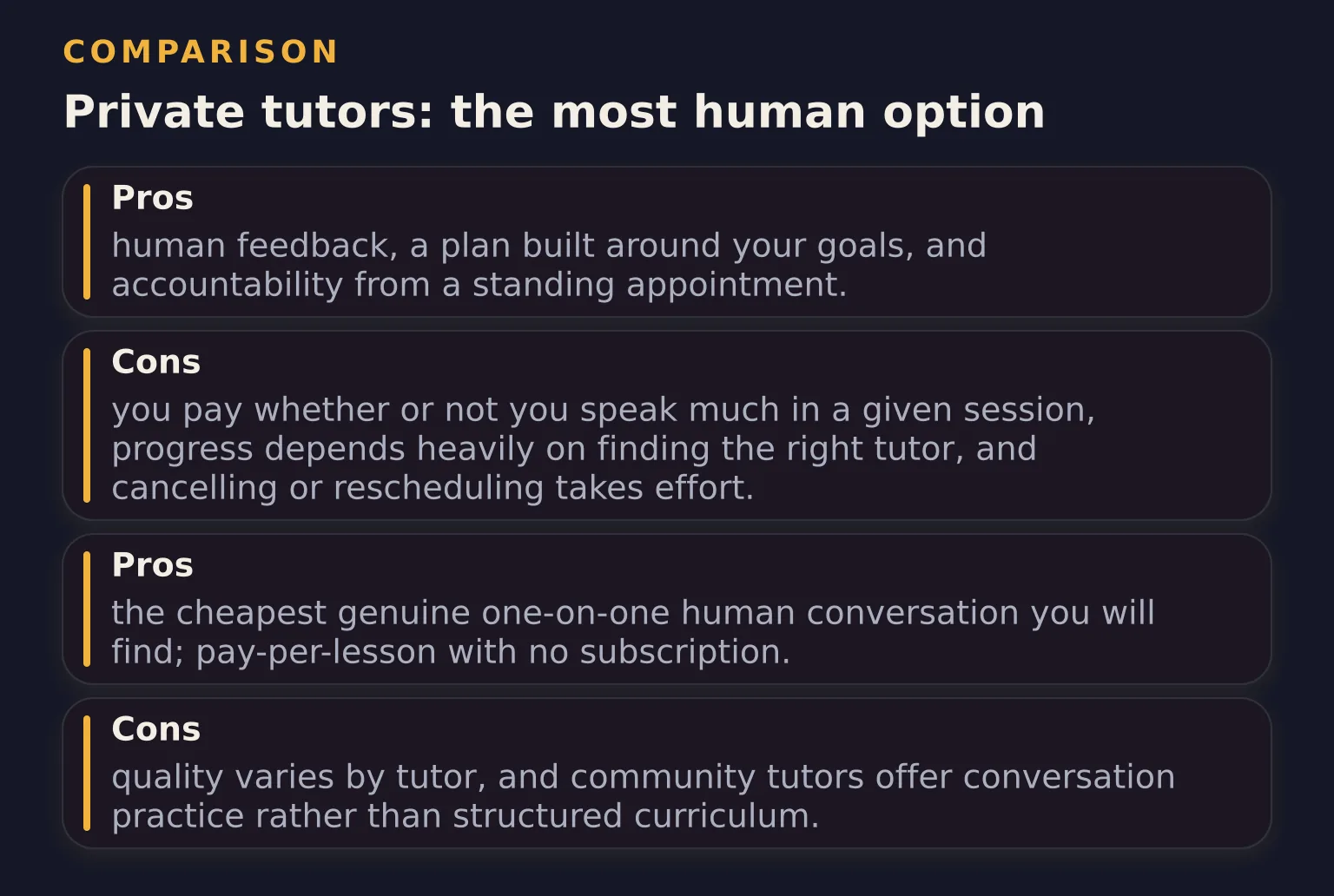
- Pros: human feedback, a plan built around your goals, and accountability from a standing appointment.
- Cons: you pay whether or not you speak much in a given session, progress depends heavily on finding the right tutor, and cancelling or rescheduling takes effort.
Preply suits adults who can commit to one or two fixed sessions a week and want structured human guidance.
italki
italki works differently: tutors set their own rates, and italki says lessons start from $4. According to italki, its community tutors, fluent speakers who focus on conversation rather than formal teaching, typically charge $4 to $20 a lesson. Professional teachers with teaching qualifications typically charge $10 to $40 a lesson (as of November 2026).
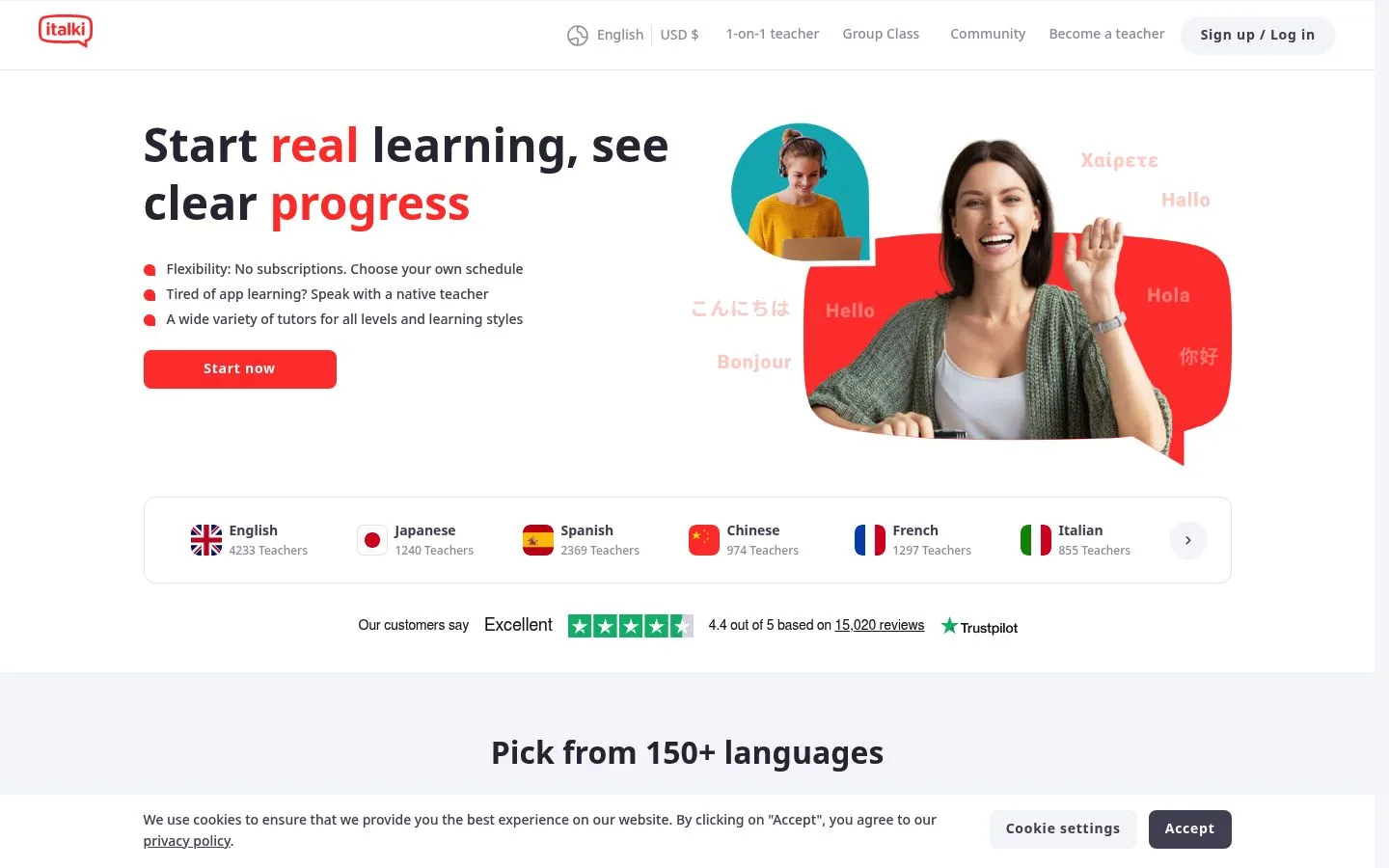
- Pros: among the cheapest genuine one-to-one conversation with a person; pay per lesson, with no subscription.
- Cons: quality varies by tutor, and community tutors offer conversation practice rather than a structured curriculum.
italki suits adults whose main gap is speaking time and confidence, and who don't need a formal syllabus. LanguaTalk is another vetted tutor marketplace; our Langotalk vs LanguaTalk comparison covers its prices and trial lessons.
Conversation coaching: a different kind of teacher
A spoken English coach, or conversation coach, isn't simply a cheaper tutor. The work is different. A tutor teaches the language. A coach analyses how you speak: hesitation patterns, filler words, pacing, whether you actually finish your sentences, and how you handle being interrupted.
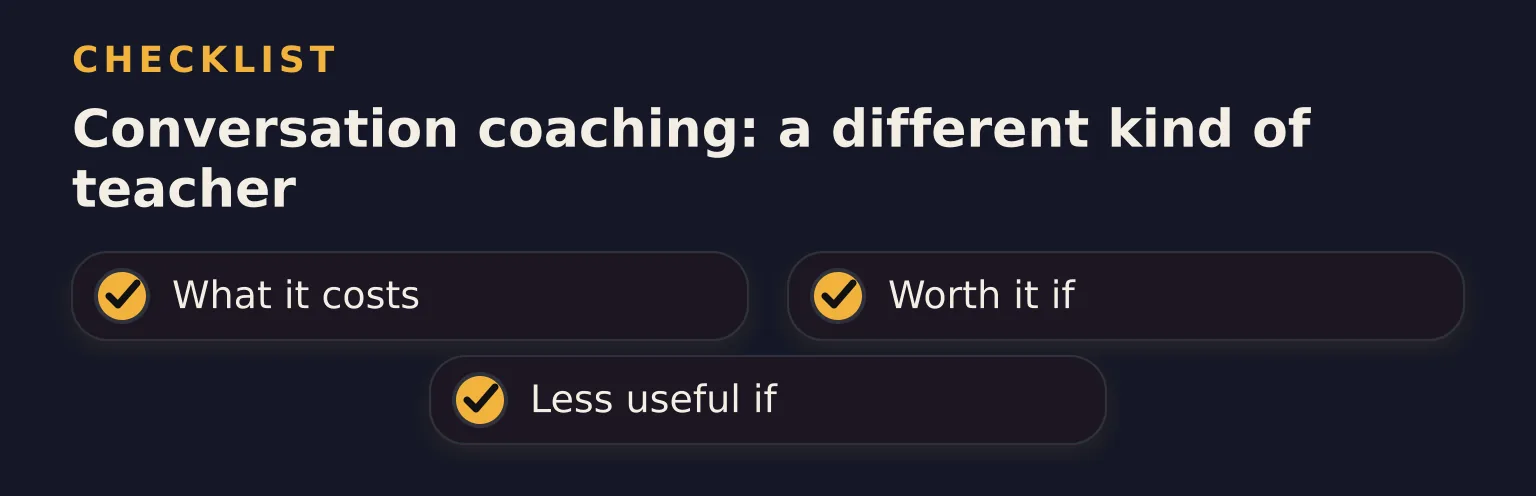
- What it costs: there's no standard market rate. Independent coaches set their own prices, often in the same range as a mid-priced tutor, so compare a few before booking.
- Worth it if: you've plateaued, your blocker is nerves or delivery rather than knowledge, and you want specific feedback on your speaking habits.
- Less useful if: you're a beginner who still needs vocabulary and structures, which is ordinary tutoring work.
What differs is what the hour buys. A coach works only on delivery and conversation habits, which is exactly the problem a general lesson often keeps missing. No single official body stands behind conversation coaching. Independent coaches sell through their own sites, directories and tutoring platforms, so check a coach's credentials and reviews before booking.
Coaching targets the exact problem many adult learners have: years of classroom study, good reading skills, and no ability to hold a live conversation.
Group classes: structure on a schedule
Group classes trade individual attention for a lower price and built-in routine.
Lingoda
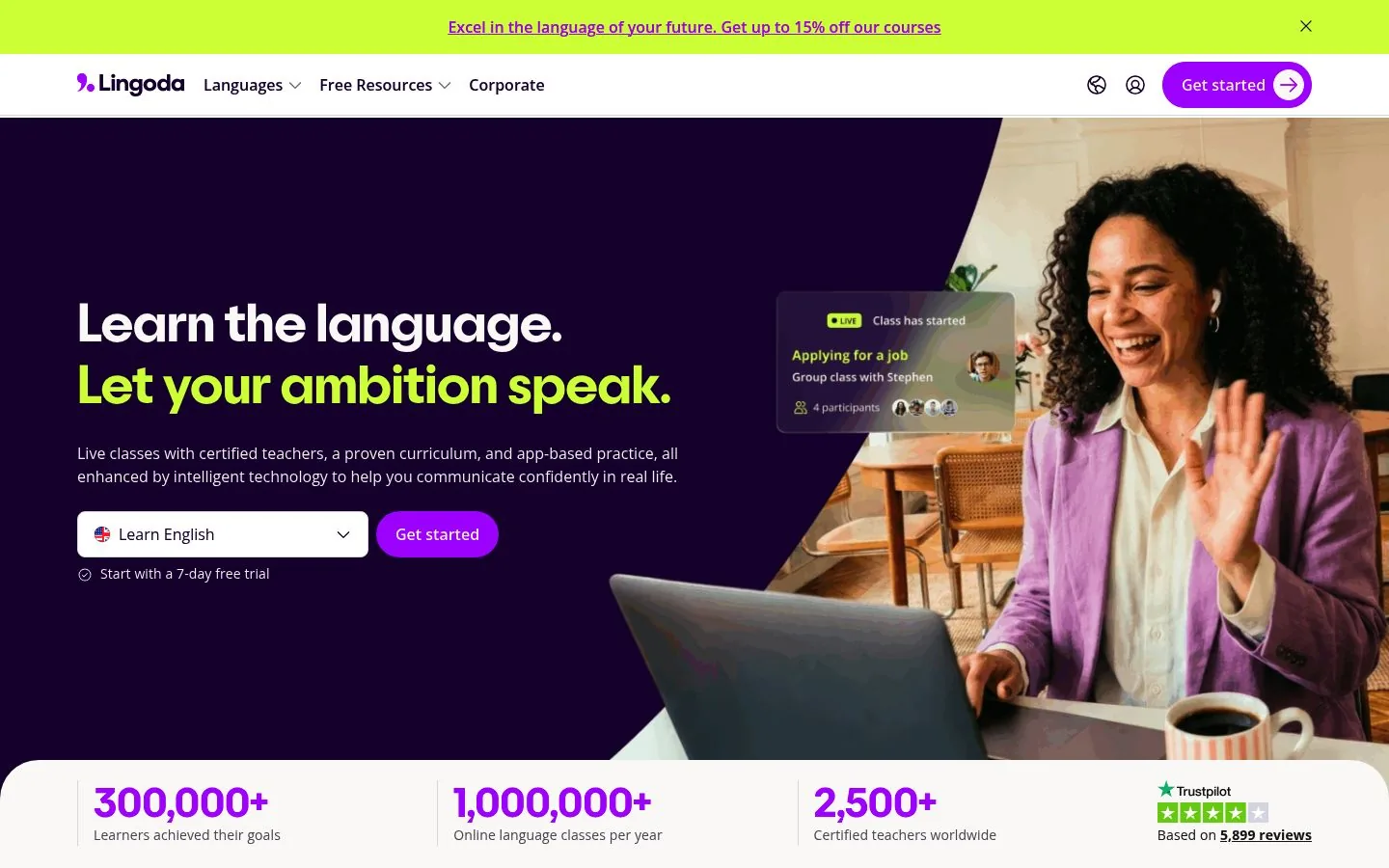
Lingoda sells class plans that renew every four weeks, with unused class credits rolling over. Group classes have 3 to 5 students and last an hour. For English in the US in November 2026, group classes cost from $13.99 each on a 5-class plan ($69.99) down to $6.99 each on a 40-class plan. Private classes ran from $42.99 down to $20.99 each.
- Pros: a teacher, a curriculum and a schedule that forces consistency.
- Cons: in a class of five, you speak for a fraction of the hour. You also commit to a plan, so skipped classes waste money.
Group classes suit adults who want external structure, enjoy learning with others, and accept limited personal airtime.
App subscriptions: cheap daily drills
Pronunciation and speaking-practice apps fill a different slot: short daily practice, usually five to fifteen minutes, with instant automated feedback.
ELSA Speak
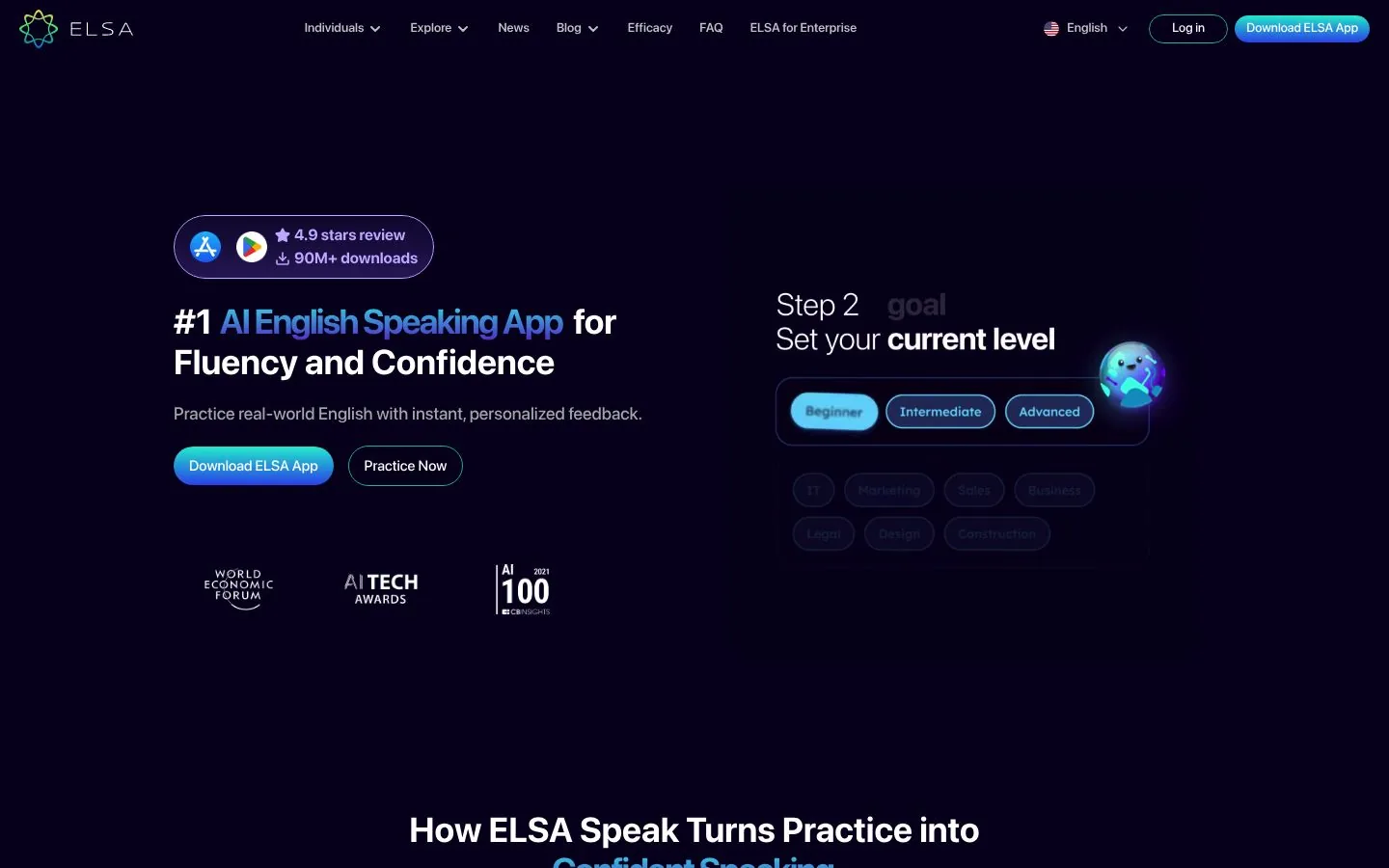
ELSA focuses on pronunciation scoring and fluency training for English. On ELSA's site in November 2026, Premium cost $159.99 a year (about $13.33 a month) or $59.99 for three months. There's also a limited free version.
- Pros: immediate, objective feedback on how you sound; low cost; genuinely useful for fixing specific pronunciation problems.
- Cons: it drills and scores rather than converses. There's no real back-and-forth, no follow-up questions and no pressure to produce your own sentences.
Drill apps suit adults with a specific pronunciation gap, or anyone who wants a cheap daily warm-up. They don't replace conversation. If English is the language you're working on, our stage-by-stage plan for fluent English speaking shows where drills fit alongside conversation.
AI conversation partners: practice without pressure
AI partners sit between drill apps and human tutors. Instead of scoring single sentences, they hold a real voice conversation with you and respond to what you say. Most have a free tier, and paid plans typically cost $15 to $20 a month. Our comparison of AI language learning apps covers the main options.
TalkHabit
TalkHabit is the app we make. It's built around one short voice conversation a day with a personal AI partner. The partner adjusts to your level, from beginner to advanced, says your mistakes back the right way while you keep talking, and remembers your past conversations, so sessions continue rather than restart. It's built Spanish-first, with English, French and German also available, and runs in a browser and on Android, with no iPhone app yet. The free plan gives you 5 minutes a day. TalkHabit Plus gives up to 10 minutes a day for $14.99 a month or $99.99 a year (US prices as of November 2026), after a 7-day free trial.
- Pros: nearly the whole session is your voice, it's available whenever you are, and there's no social pressure, which matters if speaking makes you nervous.
- Cons: sessions are short by design, it covers only four languages, and it can't replace human interaction. A Cambridge Annual Review of applied linguistics makes the same caution about AI language tools in general: they don't simulate the full complexity of talking with a person.
The research on AI conversation practice is encouraging, with caveats. A 2025 meta-analysis in ReCALL pooled 16 studies of dialogue-based systems. It found a moderate overall effect (g = .61) on second-language speaking development. Read that as a direction: AI practice helps, especially with the volume of speaking, while human feedback still adds depth that no system matches yet.
If you want to judge free AI speaking partners before committing, see Free AI English Speaking Practice: Find the Right Partner.
The metric that matters: cost per speaking minute
Sticker price hides the real comparison. Try cost per minute of you actually talking:
- A $13.99 group class with five students: if you get about 10 minutes of airtime, that's roughly $1.40 per minute you speak.
- A $16 private lesson (Preply's average for speaking practice): with maybe 25 minutes of your own speaking, about $0.64 a minute.
- An AI partner at about $15 a month, used for 10 minutes a day, works out to around 5 cents a speaking minute. Free tiers cost nothing.
This is why budget learners often get better results from short daily sessions than from one expensive weekly lesson. The expensive lesson buys human nuance and accountability; the daily sessions buy volume. You need both, and you can buy them separately.
How to choose: a decision path
Match your budget, weekly time and confidence to a starting format:
- You can commit to two live sessions a week and have $50 to $150 a month: book a private tutor, a community tutor on italki or a standard Preply tutor. Add free daily AI practice between sessions.
- You can afford $30 to $80 a month and want structure: group classes such as Lingoda, accepting the limited airtime, or one weekly lesson with a lower-priced community tutor.
- You have time but almost no budget: language exchange apps such as HelloTalk or Tandem pair you with native speakers for free, in exchange for helping them with your language. It works, but scheduling with strangers takes effort, and an always-available AI partner can fill the gaps.
- You freeze when speaking, or feel judged: start with an AI partner, where nobody is listening but the software. If nerves are your main blocker, Speaking Anxiety: How to Stop Freezing in a New Language has practical steps. Move to live sessions once speaking stops feeling like a performance.
- You speak fine but have plateaued: a conversation coach rather than more general lessons.
- You have no conversation partner and no budget for one: Language Practice at Home: Speaking Without a Partner covers self-led methods, including shadowing, that work alongside any of these options.
Whichever route you pick, level matters more than format. A mismatched level wastes money in every option. If you're unsure where you stand, How to Choose Your Speaking Level walks through it.
The limits of every option, and the case for stacking
No single format covers everything:
- Tutors and coaches cost real money and depend on scheduling, so most adults manage one or two sessions a week at best.
- Group classes ration your airtime.
- Drill apps don't converse.
- AI partners give volume and patience, but not human nuance, cultural instinct or a relationship.
That's the case for combining one live option with daily practice. The live session gives you a person to prepare for and feedback that machines miss. The daily session keeps your mouth moving on the other six days, which is what most adults actually struggle with: not the lesson, the consistency. If the routine itself is your weak point, our five-minute daily speaking routine shows how short sessions become automatic.
If you want to test the daily layer first, you can create a free TalkHabit account and see whether five minutes a day changes how a paid lesson feels a week later.