Best Apps to Learn Chinese (Mandarin) in 2026, by Goal
By Primoz, Founder of TalkHabit
Published · Updated · 11 min read
There's no single best app to learn Chinese. The right choice depends on your goal: speaking out loud, a solid beginner foundation, reading characters, writing them, or listening to Mandarin as it's really spoken. Most learners end up with a small set: one course app for structure, a dictionary, and something that makes them speak every day.
The picks below are grouped by goal, not ranked. Every price is the US price shown on the vendor's own site or US App Store listing on 3 November 2026. Prices change and vary by country, so check before you subscribe.
Choose by goal, not by ranking
Asking which Chinese app is "best" is like asking which kitchen tool is best. It depends on what you're making. The same app can be excellent for reading and do almost nothing for your speaking. Learners make the same point in a popular r/ChineseLanguage thread, Which are the best apps to learn chinese?. They argue less about which app wins and more about which combination suits their level and goal.
Here's the short version:
| Your goal | Best picks |
|---|---|
| Speak every day | Speak, or SuperChinese's built-in speaking practice, plus a tutor or exchange partner |
| A structured beginner course | HelloChinese or SuperChinese |
| A free daily habit | Duolingo, with modest expectations |
| Listening | ChinesePod or Pimsleur |
| Reading characters | Du Chinese, with Pleco as your dictionary |
| Writing characters | Skritter |
| Real conversation and tone correction | italki or Preply tutors, or a free exchange on HelloTalk |
One thing shapes all of these choices: Mandarin is a tonal language. The syllable ma means different things depending on its tone. If you never say those tones out loud, no app can correct them for you.
HelloChinese: a Mandarin-only beginner course
HelloChinese is a game-based Mandarin course with short lessons covering reading, writing, listening and speaking. Unlike apps adapted from a European-language template, it was built for Chinese. It starts with a dedicated pinyin course, supports both simplified and traditional characters, and uses speech recognition to correct your pronunciation.

It works well as a first course because the lessons are short and the path is clear. It's free to download with a Premium upgrade. HelloChinese doesn't publish prices on its website, but its US App Store listing shows Premium at $11.99 a month or $69.99 a year (as of November 2026).
Who should skip it: if you're past the beginner stage, a beginner-first course will feel slow.
SuperChinese: a structured path with AI speaking practice
SuperChinese takes a similar approach in a different style. It has an eight-level learning path with content equivalent to HSK 1 to 5, and more than 1,000 short lessons of about ten minutes each, written by native Chinese teachers. It also has an AI assistant called CHAO.
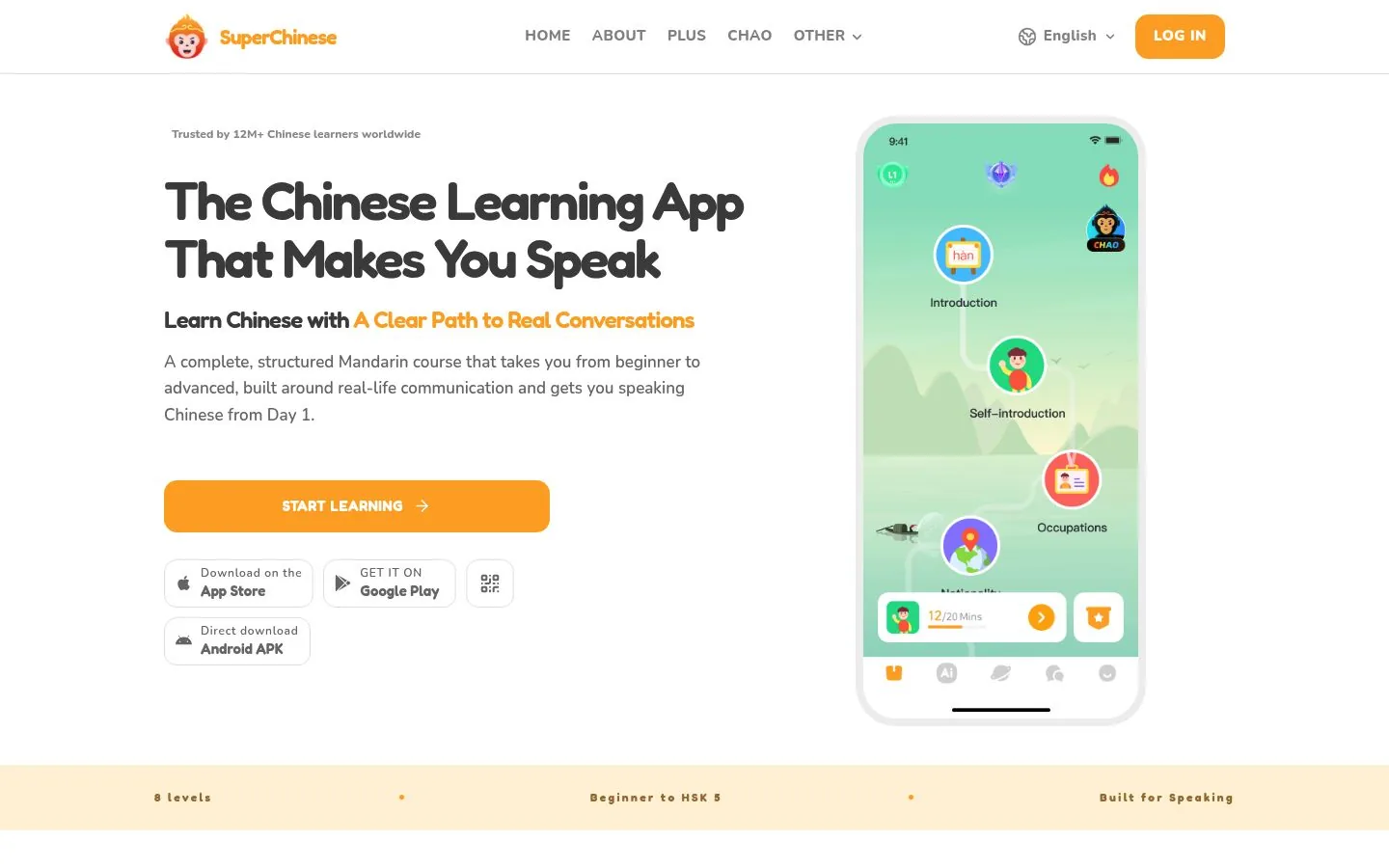
Every lesson ends with speaking practice with its AI teacher, which most course apps don't do. There's a free tier with limited access. Paid plans on SuperChinese's plans page were $11.99 a month, $69.99 a year or $149.99 for lifetime access (as of November 2026).
Speak: speaking-first lessons in Mandarin
Speak is a speaking-first app, and Simplified Chinese is one of the six languages it teaches English speakers. Each lesson has you learn a few phrases, say them out loud straight away, then use them in conversation with an AI tutor that gives feedback on pronunciation and phrasing. It's the closest thing here to a daily speaking habit you can do alone.
The catch is cost. Speak has a 7-day free trial and no permanent free tier. Its US App Store listing shows Premium at $17.99 a month or $83.99 a year (as of November 2026). If you're weighing it against a free option, our Duolingo vs Speak comparison covers the tradeoffs.
Duolingo: is it actually good for Chinese?
This question keeps coming up in search, so here's the honest answer: Duolingo is a good way to build a free habit and a weak Mandarin teacher.
What it does well:
- Learning is free. Super Duolingo removes ads and adds extras such as practice built from your mistakes.
- The streak system really does get people to show up every day.
- There is a Chinese course, so you get exposure to characters, pinyin and vocabulary.
Where it falls short for Mandarin:
- Tone training is weak. Much of the time you're matching sounds by tapping, which isn't the same as producing tones yourself.
- Grammar explanations are sparse. That hurts in a language with measure words and very different sentence structure.
- Speaking practice is limited and short, so your mouth doesn't get the workout it needs.
If your streak has become the whole of your studying, that's a common pattern, and there are better Duolingo alternatives for learners who want to speak. Keep Duolingo as a warm-up if you enjoy it, but don't rely on it alone for Chinese.
ChinesePod: listening practice at every level
ChinesePod is a Mandarin lesson library. Its site lists more than 4,000 lessons across six levels, from Newbie to Advanced. The free plan gives access to all lessons, with ads before playback and limited access to each lesson's dialogue, vocabulary and exercises.
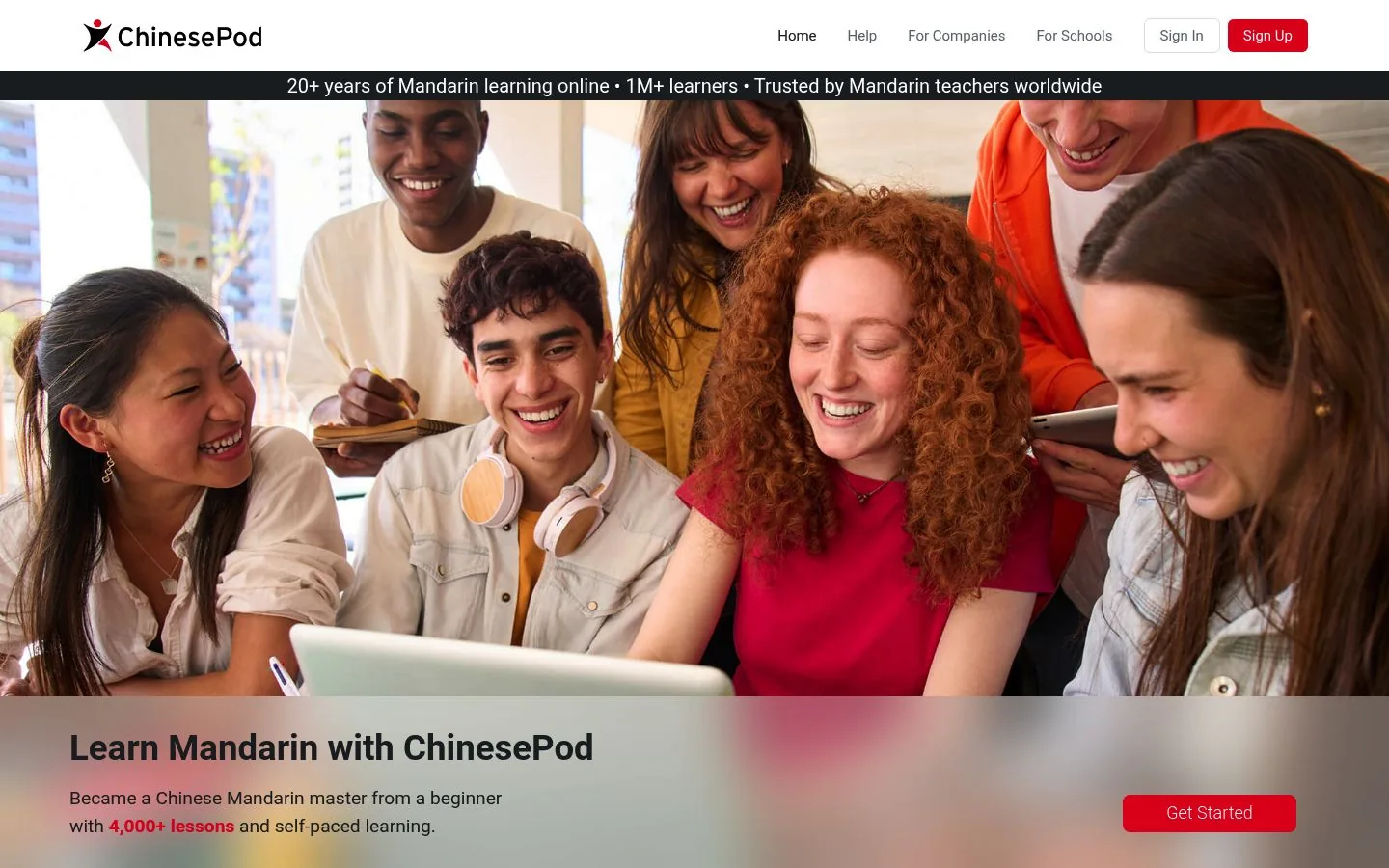
According to its pricing page, Premium costs $29 a month (as of November 2026), with a 14-day trial. It adds courses, interactive practice tests and an exclusive "Say It Right" pronunciation course, and ChinesePod also offers quarterly and annual billing. It suits intermediate learners best: people who know some Chinese and need lots of real dialogue. Who should skip it: if you want a linear course that tells you what to do next, a library like this can feel unstructured.
Pimsleur: speaking sentences from lesson one
Pimsleur is the opposite of tap-and-match. Its audio-first lessons, about 30 minutes each, have you answer out loud throughout, which makes it one of the few mainstream apps that actually forces spoken output. It has a 7-day free trial. On pimsleur.com in November 2026, the US audio-only plan was $14.95 a month and Premium $19.95 a month.

The tradeoff: there's very little reading or character work. It's strongest for pronunciation, rhythm and speaking confidence. Many learners do Pimsleur in the car and use other tools for characters.
Pleco: the dictionary every serious learner installs
Pleco isn't a course. It's the Chinese dictionary app that almost every other app on this list assumes you already have. Look up words by typing or handwriting and get definitions with audio. A paid add-on lets you point your camera at a sign or menu.
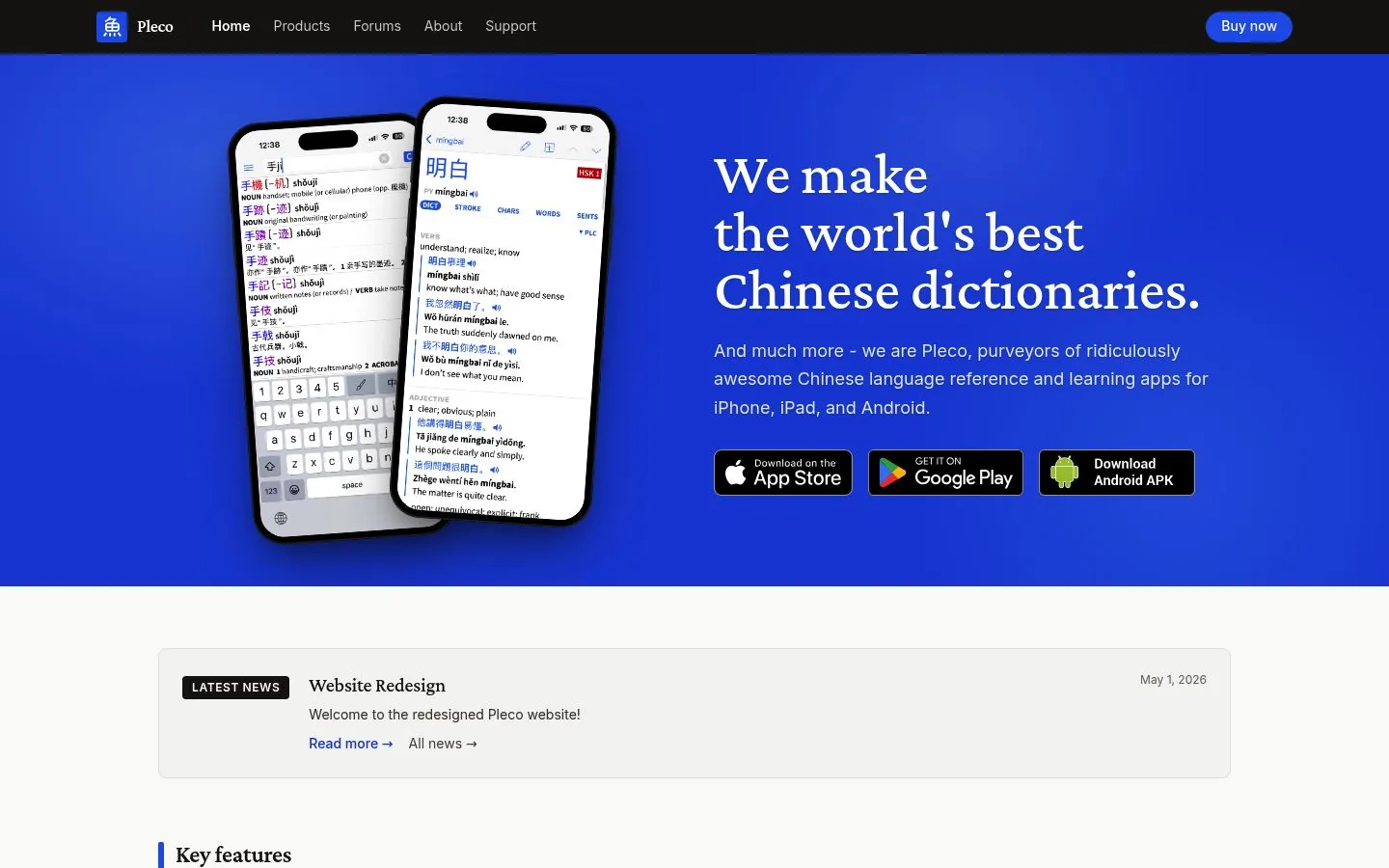
The core app is free. Pleco's pricing page lists a Basic Bundle at US $29.99 and a Professional Bundle at US $59.99 (as of November 2026). Both are one-time purchases and add camera lookup (OCR), flashcards, a document reader and extra dictionaries. Pleco says there are no ads and no subscriptions, which is rare in this space. The tradeoff: a dictionary alone won't teach you much. It's a support tool, not a course.
Du Chinese: graded reading with pinyin and native audio
Du Chinese solves the classic reading problem: looking up unknown words breaks your flow. Here you tap any word to see its pinyin and definition without leaving the text, and every lesson has native-speaker audio.
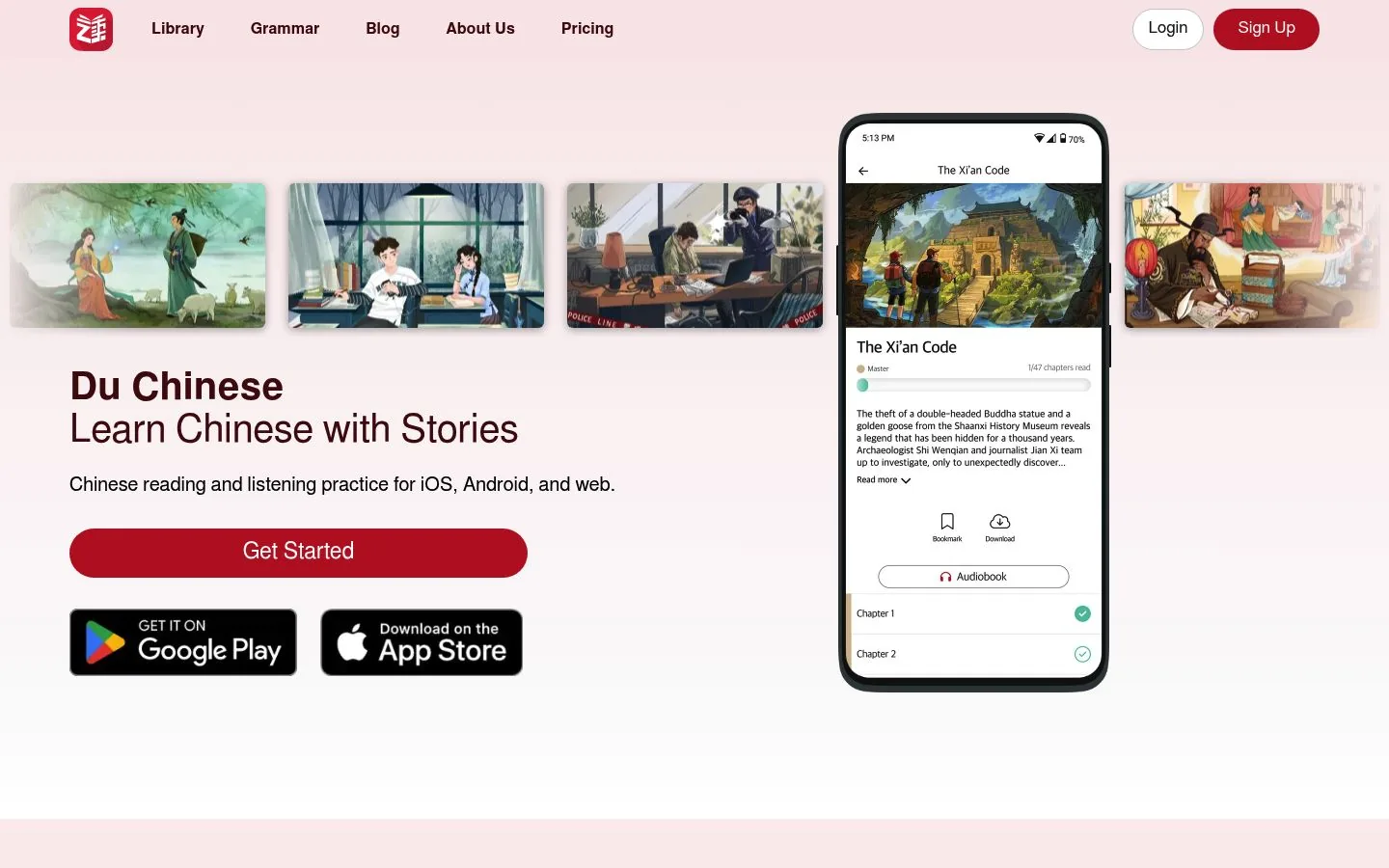
Its library has more than 3,000 readings across six levels, from Newbie to Master. According to its pricing page, the free plan is limited to free lessons. Premium was $14.99 a month, $79.99 for six months or $119.99 a year (as of November 2026). It pairs well with Pleco, and it integrates with Pleco, Skritter and Hack Chinese.
Skritter: learn to write characters by hand
Skritter is the go-to app for handwriting. You write characters with a finger or stylus and it grades every stroke as you go, which beats copying characters onto paper with no feedback.
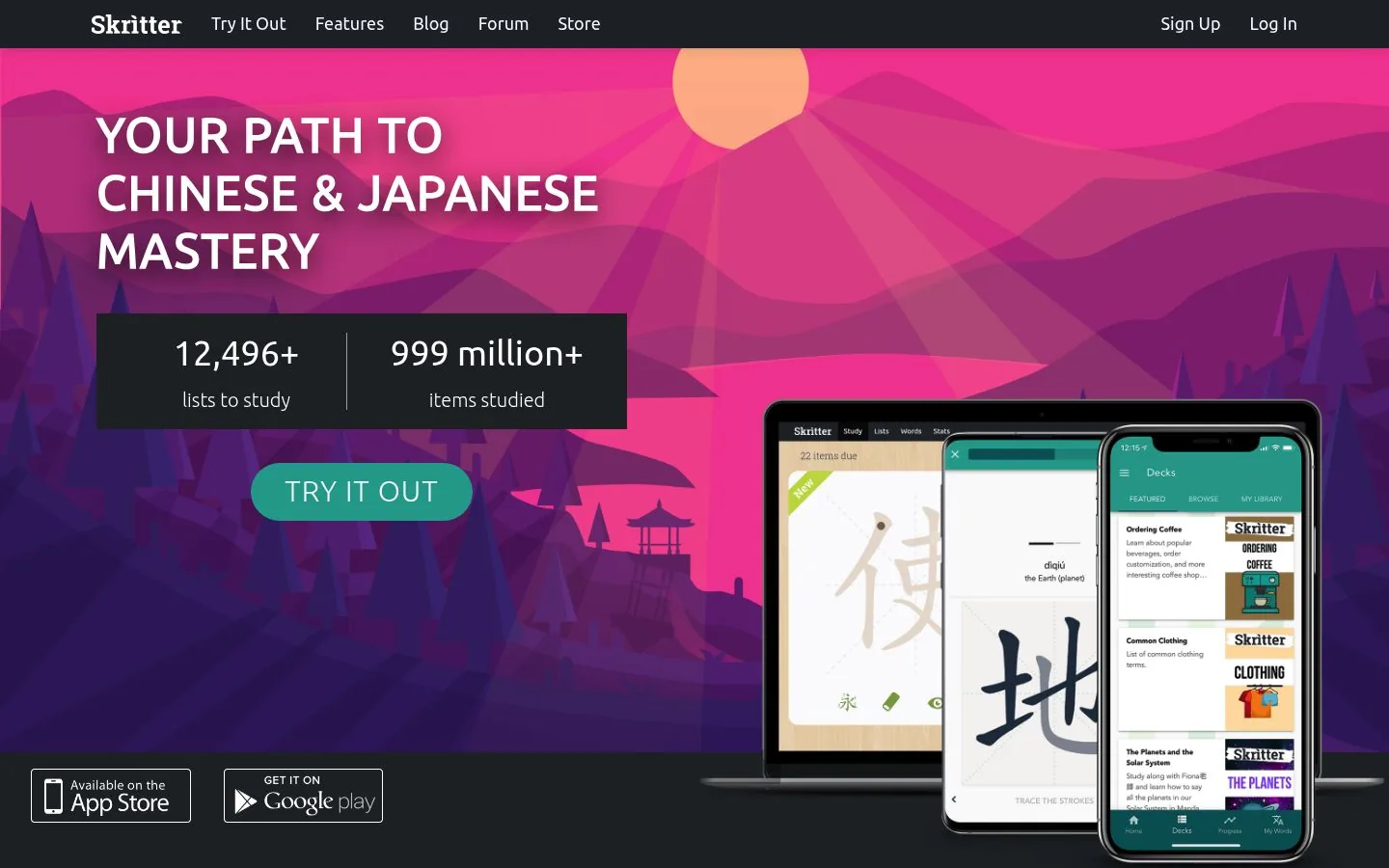
It covers Chinese and Japanese on one account, with study decks that follow HSK levels. According to its FAQ, it costs $14.99 a month after a free trial, or less on longer plans: $59.99 for six months, $99.99 for twelve or $179.99 for twenty-four (as of November 2026). Who should skip it: if you only need to read and type Chinese, you don't need to pay for handwriting.
italki: real tutors, real tone correction
italki lets you book one-to-one video lessons with Mandarin tutors. A human tutor hears a tone drifting, tells you why, and makes you fix it on the spot. An app can flag mistakes, but a tutor hears the whole context in real time and adjusts in ways software can't.
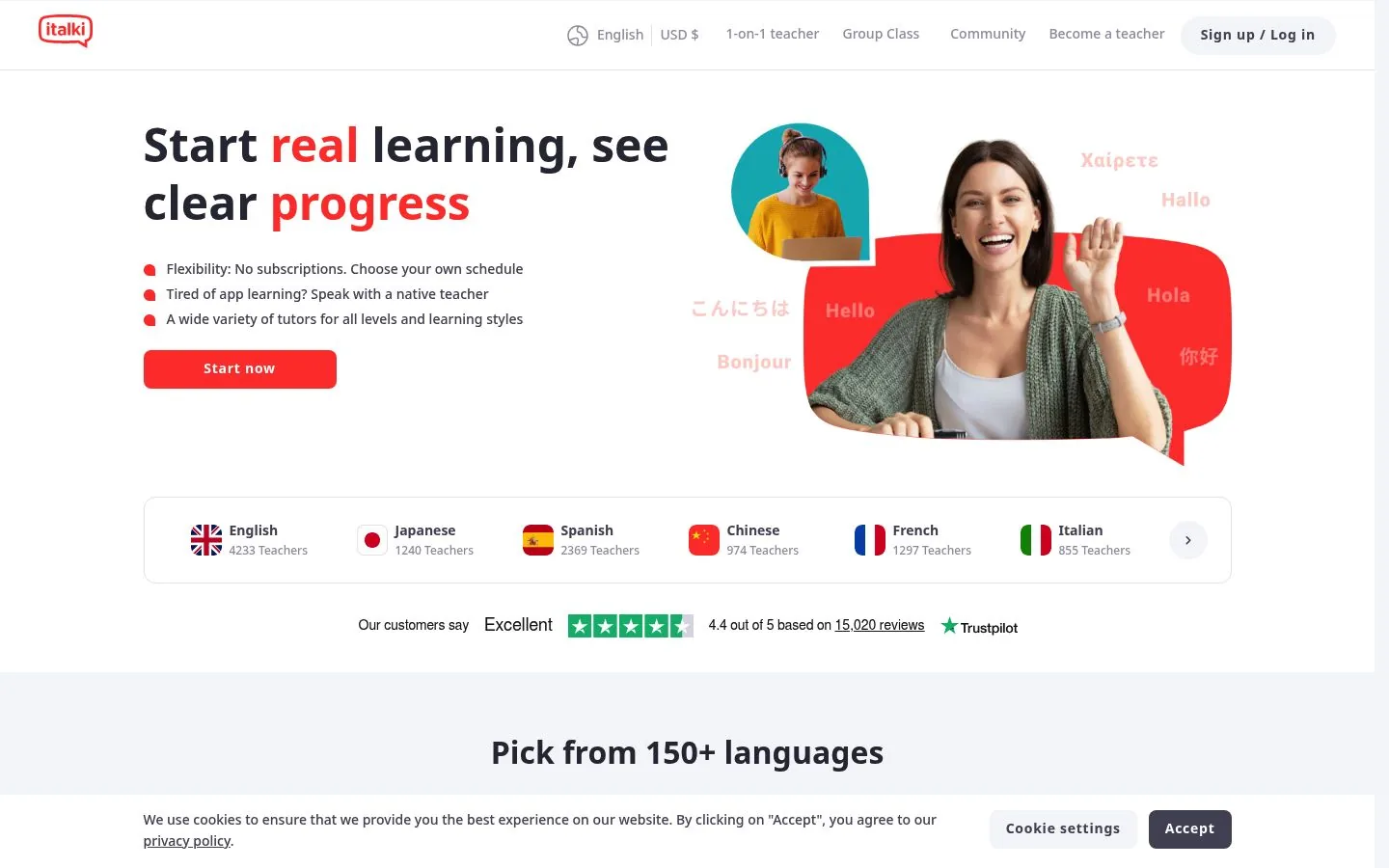
Tutors set their own prices, which vary widely. When we checked italki's Mandarin tutor listings in November 2026, trial lessons ranged from about $5 to $38. The tradeoff: it costs more per hour than any app, and booking lessons takes more commitment than opening one. If a live tutor feels like too big a first step, read how to practise speaking without a partner.
Preply: a tutor marketplace with trial lessons
Preply is a similar tutor marketplace, with 25- or 50-minute trial lessons and filters for price, availability and specialty. As of November 2026, its Chinese tutors page said classes start from $3, with an average of $13. Each tutor sets their own rate, so check the profile rather than trusting any listed average. The tradeoffs are the same as italki: excellent correction, real money, and you have to schedule it.
HelloTalk: free exchange with native speakers
HelloTalk is a language-exchange app. You chat with native Chinese speakers by text, voice or video, and they correct your messages while you correct theirs.
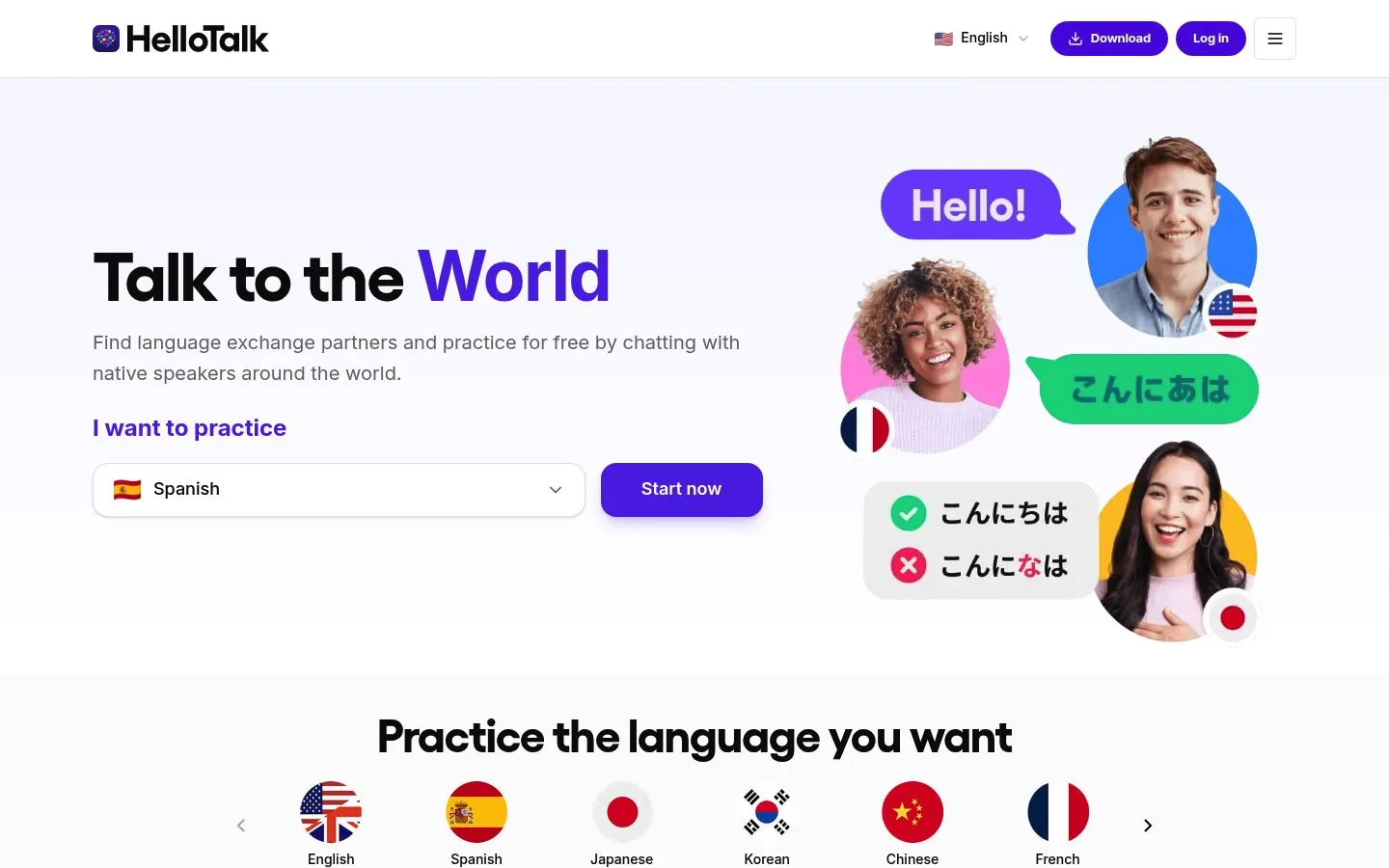
It's free, with an optional VIP membership that adds unlimited translations (free members get 10 a day). The tradeoff: it's free and real, but it's a social app. Progress depends on finding a reliable partner, and some learners find casual chat too unstructured for steady improvement.
When one app isn't enough
The most common setup that works combines three roles:
- Structure: HelloChinese or SuperChinese, for a clear path through vocabulary and grammar.
- Input: Du Chinese plus Pleco for reading, or ChinesePod for listening.
- Output: Speak or SuperChinese's speaking practice daily, plus an occasional italki or Preply lesson, or a HelloTalk exchange, for human tone correction.
Notice which role most app routines leave out: the third one. Learners can spend a year tapping through lessons and still freeze when someone speaks to them. If that sounds like you, how to build a five-minute daily speaking habit is a practical next read.
What apps can't do for Mandarin
No app can give you the tones while you tap. Mandarin's four tones live in the muscles of your mouth, and the only way to build them is to speak out loud, often, with feedback. When a course app says "speaking", it often means repeating one word into the microphone. That helps, but it isn't conversation.
That's why picking by goal matters even more for Chinese than for French or Spanish. If practising with an AI chatbot is new to you, how to use an AI chatbot for language learning covers the habits that make these tools useful. For a wider look at AI speaking apps, see our comparison of AI language learning apps for speaking.
How to choose: a short checklist
Answer four questions before you pick:
- What's your weakest skill right now? Choose the app that targets it, not the one with the best marketing.
- Are you a beginner, or already reading paragraphs? Beginners should start with a course app. Intermediate learners get more from Du Chinese, ChinesePod and conversation practice.
- What will you actually do every day? A five-minute routine you keep beats an hour you skip three times a week.
- How does it fit with your other apps? Structure, input and output should come from different tools, not one app stretched too far.
If your answer to the first question is "speaking", you share the gap most learners have. The cheapest way to find out whether speaking practice changes things is to try it for a week: Speak's 7-day trial, SuperChinese's free tier or one trial lesson with a tutor. Pair it with a course app at your level and you'll have the two parts that matter most covered.