Best Duolingo Alternatives for Speaking Practice (2026)
By Primoz, Founder of TalkHabit
Published · Updated · 10 min read
If you want to speak more than Duolingo makes you, the best alternative depends on your main frustration. Speak is a structured course built around talking, and Pimsleur gives you hands-free audio lessons you answer out loud. Babbel actually explains the grammar. Praktika is cheap, open AI conversation, and italki puts you in front of a real tutor. TalkHabit, the app we make, is a short daily speaking call, mainly for Spanish.
Duolingo is a good app for what it does. It turns learning into a habit, drills vocabulary and makes five minutes of study easy. What it underdelivers, for many learners, is speaking. Most lessons ask you to tap, match and recognise. The speaking you do get is often repeating a set sentence into the microphone, not holding up your end of a real conversation. Its AI conversation features are on paid plans and in the mobile app only.
How we judged each alternative
Speaking time out loud per session is the main criterion. A lesson where you talk for four of five minutes beats one where you tap for four minutes and speak for one.
Four other questions matter too:
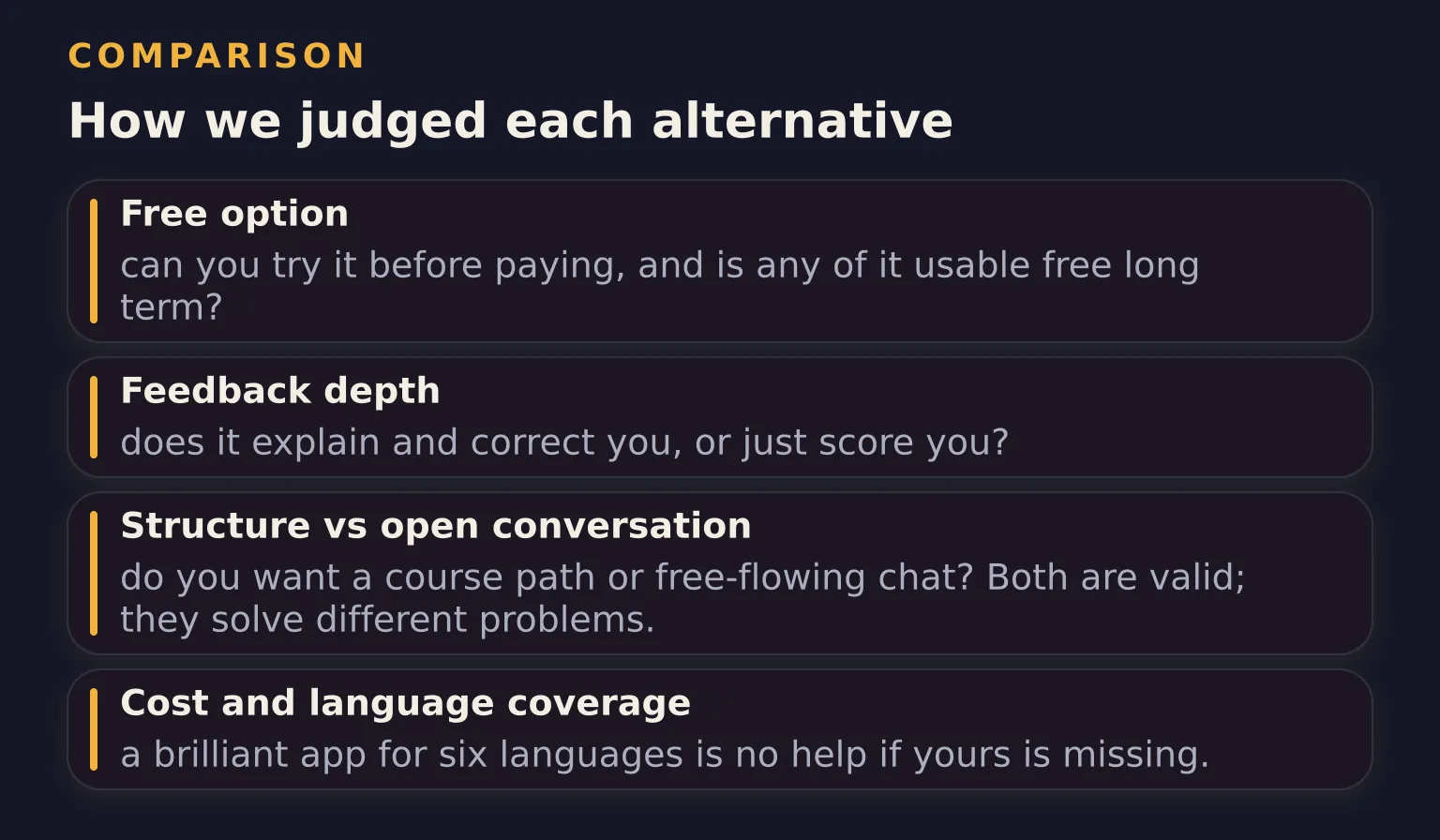
- Free option: can you try it before paying, and is any of it usable free long term?
- Feedback depth: does it explain and correct you, or just score you?
- Structure vs open conversation: do you want a course path or free-flowing chat? Both are valid; they solve different problems.
- Cost and language coverage: a brilliant app for six languages is no help if yours is missing.
These judgements are based on each company's own pages, checked on 3 November 2026, not timed tests. The six alternatives are listed from the most course-like to the most open-ended, not ranked. Prices are US prices as of November 2026 and change often, so check the current terms before you commit.
Babbel: structured courses with real grammar
Babbel is what people often imagine a "serious adult course" looks like: short structured lessons and explicit grammar explanations. According to Babbel's help centre, it offers 13 languages for English speakers, with some courses reaching C1.
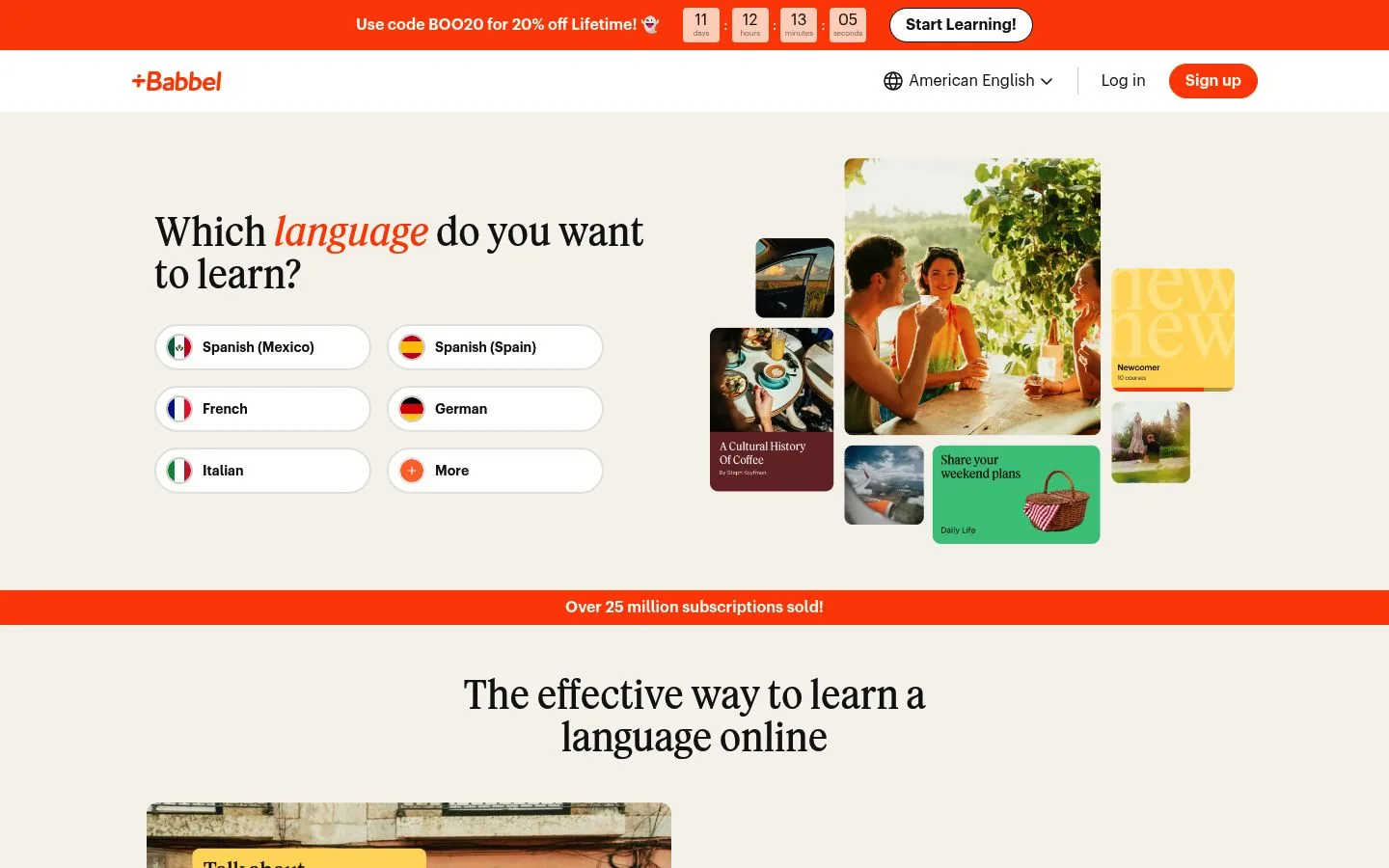
Compared with Duolingo, Babbel is less gamified and more like a curriculum, which suits learners who felt Duolingo never explained anything. It's also testing an AI conversation partner, in beta and in the mobile app only, for a few of its languages.
The tradeoff is speaking volume. Conversation practice is one part among many, and it's more scripted than free-flowing. Most of a session is still on-screen study. Where it fits best: learners whose main gap is structure and grammar, and who want some speaking included. The first lesson of every course is free. After that, US plans ran from $17.95 for one month to $8.95 a month on a 12-month plan in November 2026.
Speak: speaking-first structured lessons
Speak is the closest thing to "Duolingo's method, rebuilt around talking". Its three-step loop has you learn phrases native speakers actually use, repeat them until they're automatic, then use them in back-and-forth conversation with an AI tutor that gives real-time feedback on pronunciation and phrasing.
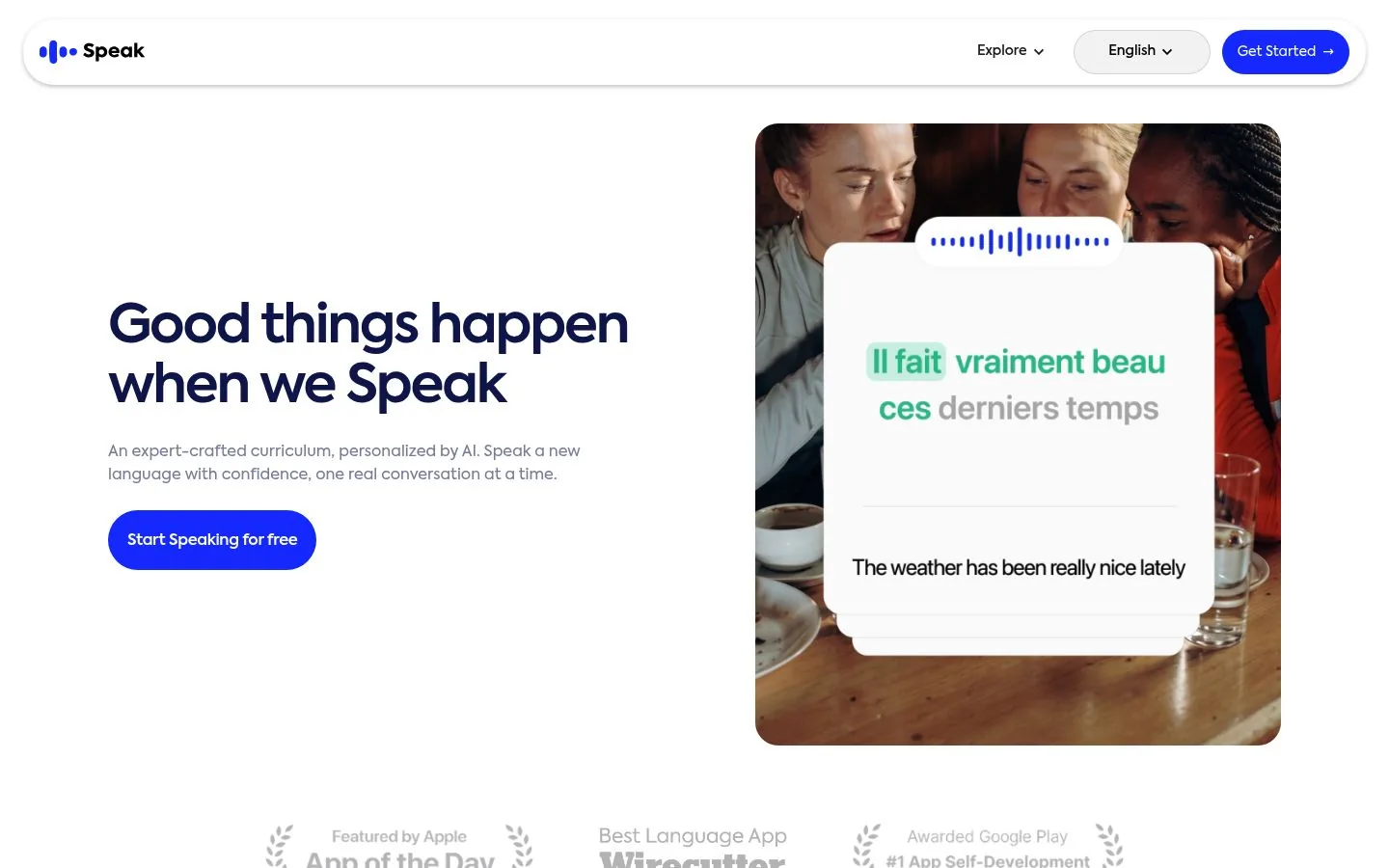
It's structured and follows a curriculum, which is exactly what appeals if you like Duolingo's guided path but want much more of the time spent talking.
Where it fits best: committed learners who will use a paid subscription seriously. It has a 7-day free trial, then needs a subscription. The US App Store lists Premium at $17.99 a month or $83.99 a year (as of November 2026). The main limitation is coverage: for English speakers, Speak teaches Spanish, French, Korean, Japanese, Italian and Simplified Chinese. If your language isn't on that list, Speak isn't an option. For a closer look, see Duolingo vs Speak.
Pimsleur: audio-first lessons for commutes and walks
Pimsleur is the oldest alternative on this list and still one of the most distinctive. Its core is a 30-minute audio lesson you can do anywhere, with no screen. You listen, answer out loud in the gaps, and build rhythm and recall through repetition. The official FAQ is blunt about why: conversation skills "cannot be mastered by matching images and words on a screen".
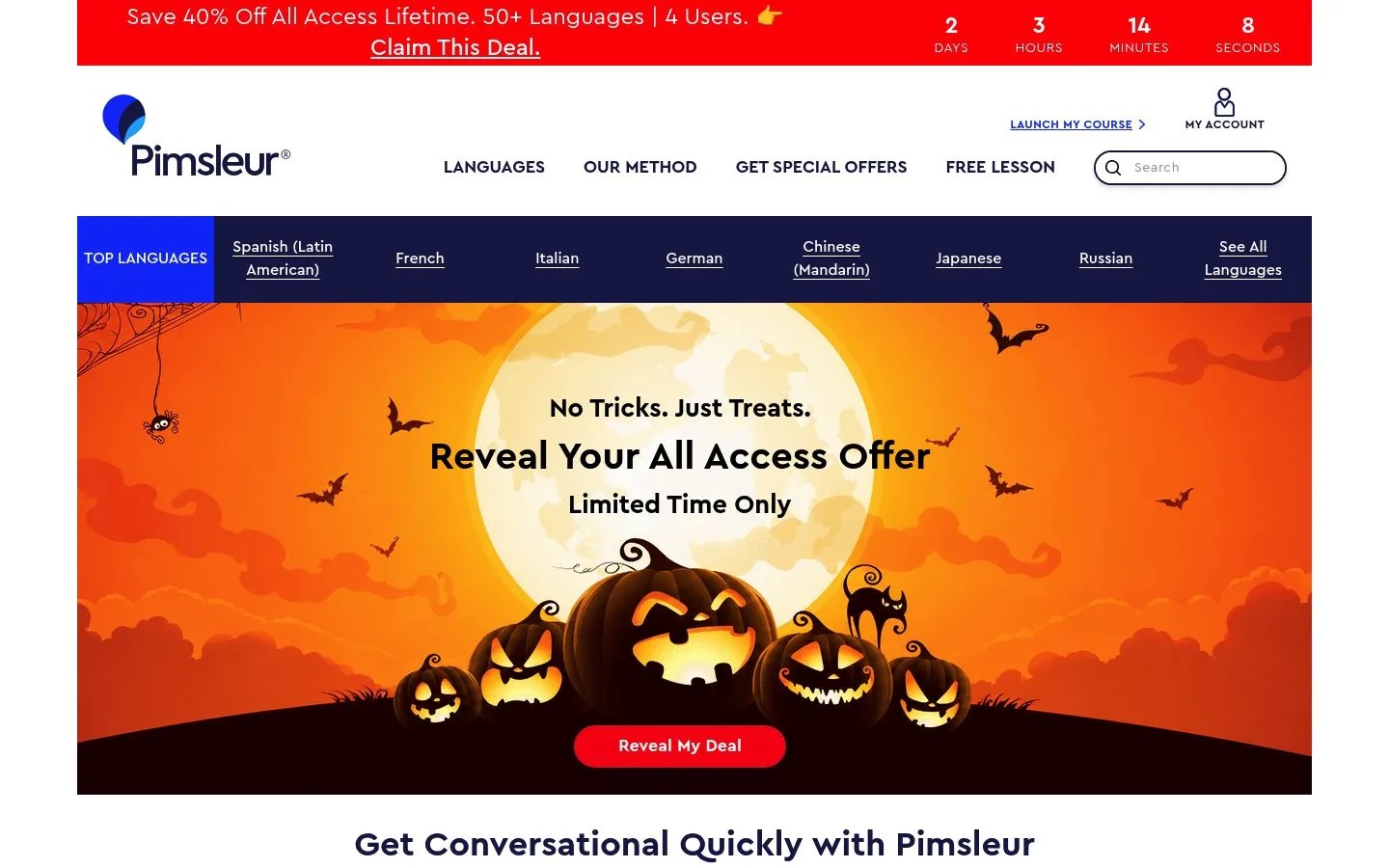
The app adds a hands-free driving mode, offline downloads, and interactive tools: Speak Easy role-play transcripts and Voice Coach pronunciation feedback.
Where it fits best: anyone whose speaking practice keeps losing to screen time. If your commute or dog walk is dead time, Pimsleur turns it into your speaking session. The tradeoff: you speak on the app's script, not your own ideas, so it builds solid foundations more than open conversation. Pimsleur covers 50+ languages, with a free first lesson and a 7-day free trial. On pimsleur.com in November 2026, the US audio-only plan was $14.95 a month, and courses can also be bought outright.
Praktika: AI avatar tutors for low-cost conversation
Praktika takes a different angle on AI speaking practice: lifelike animated AI tutors that you talk to by voice, which listen, respond and correct you in real time.
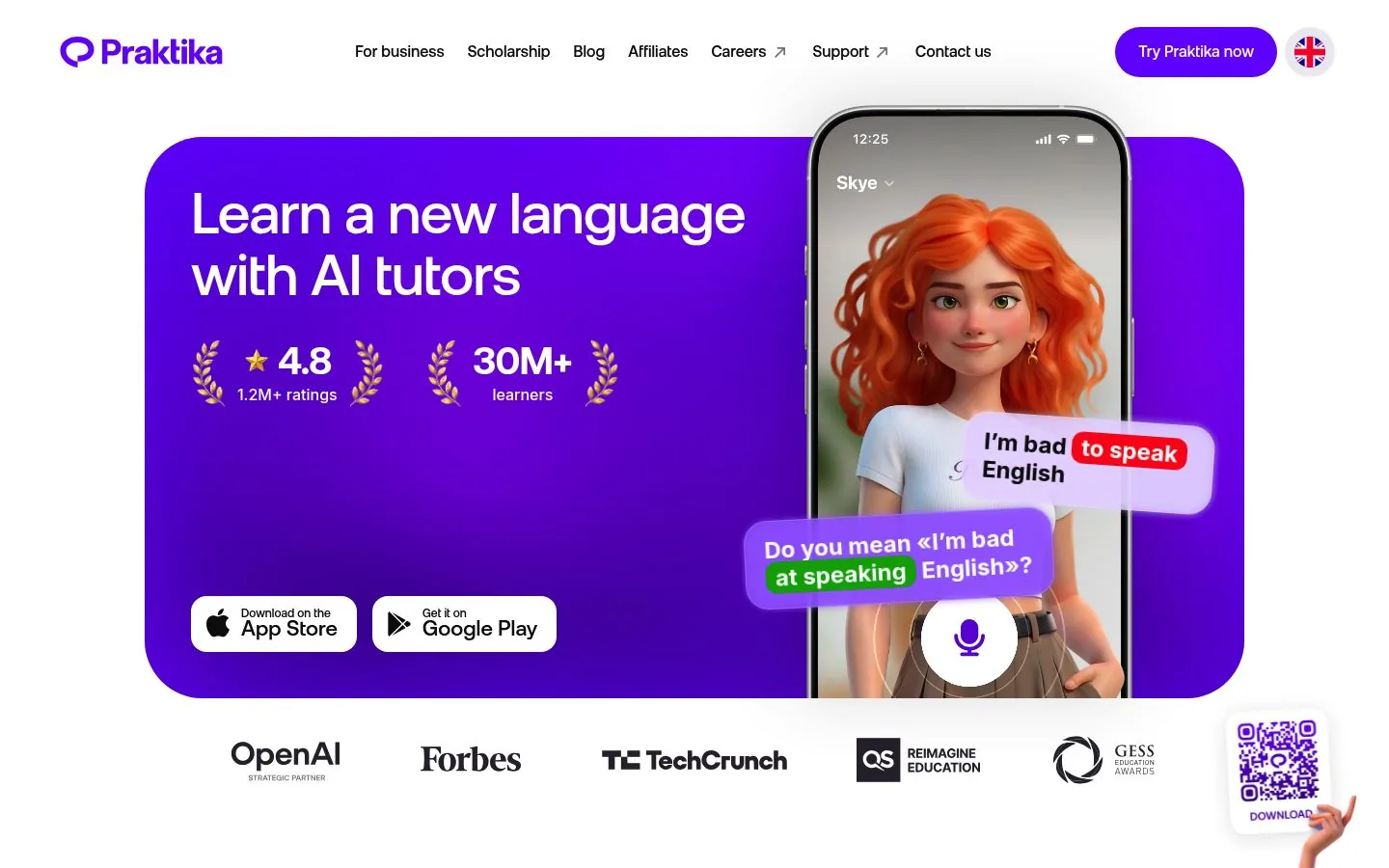
Its strengths are breadth and price. Its App Store listing names English, Spanish, French, German, Italian, Portuguese, Japanese, Korean, Chinese, Arabic, Russian, Polish and Dutch. It's free to download with in-app purchases, and the US App Store listed Premium at $9.99 a month (as of November 2026), well below what human tutors cost.
Where it fits best: learners who want lots of open, forgiving conversation practice for little money. The tradeoff: it's less of a structured course than Speak or Babbel. Check current pricing in the app, as plans and promotions change.
TalkHabit: a short daily speaking call
TalkHabit is the app we make, so weigh this section with that in mind. It's built around one job: getting you to speak out loud for a few minutes every day, without a human partner and without pressure.
You have a short voice conversation with a personal AI partner set to your level: beginner, intermediate or advanced. It asks follow-up questions, says your mistakes back the right way as you talk, and remembers what you discussed, so sessions feel continuous rather than starting from zero. For Spanish, each call also has a grammar focus picked from your recent mistakes. After a call on the web, you see a few sentences you said next to the corrected versions.
Where it fits best: if your Duolingo frustration is "I know the words but never say them out loud" and you're learning Spanish, this is a low-friction start. It's free for 5 minutes a day. Plus gives up to 10 minutes a day for $14.99 a month or $99.99 a year (US prices as of November 2026), after a 7-day free trial.
The honest limits: it's Spanish-first. English, French and German are available, but the grammar focus is Spanish-only. It runs in a browser and on Android, and there's no iPhone app yet. It's a conversation practice tool, not a course, so if you want grammar explanations and a curriculum, look at Babbel or Speak. If you try it, this guide on practising speaking without a partner shows how to build the habit around an AI partner. This one helps you choose your speaking level before your first session.
italki: real human tutors
If your frustration with Duolingo is that you want to talk to an actual person, italki is the human answer. It's a marketplace of online tutors and teachers for a huge range of languages, from community tutors to professional teachers with different styles and prices.
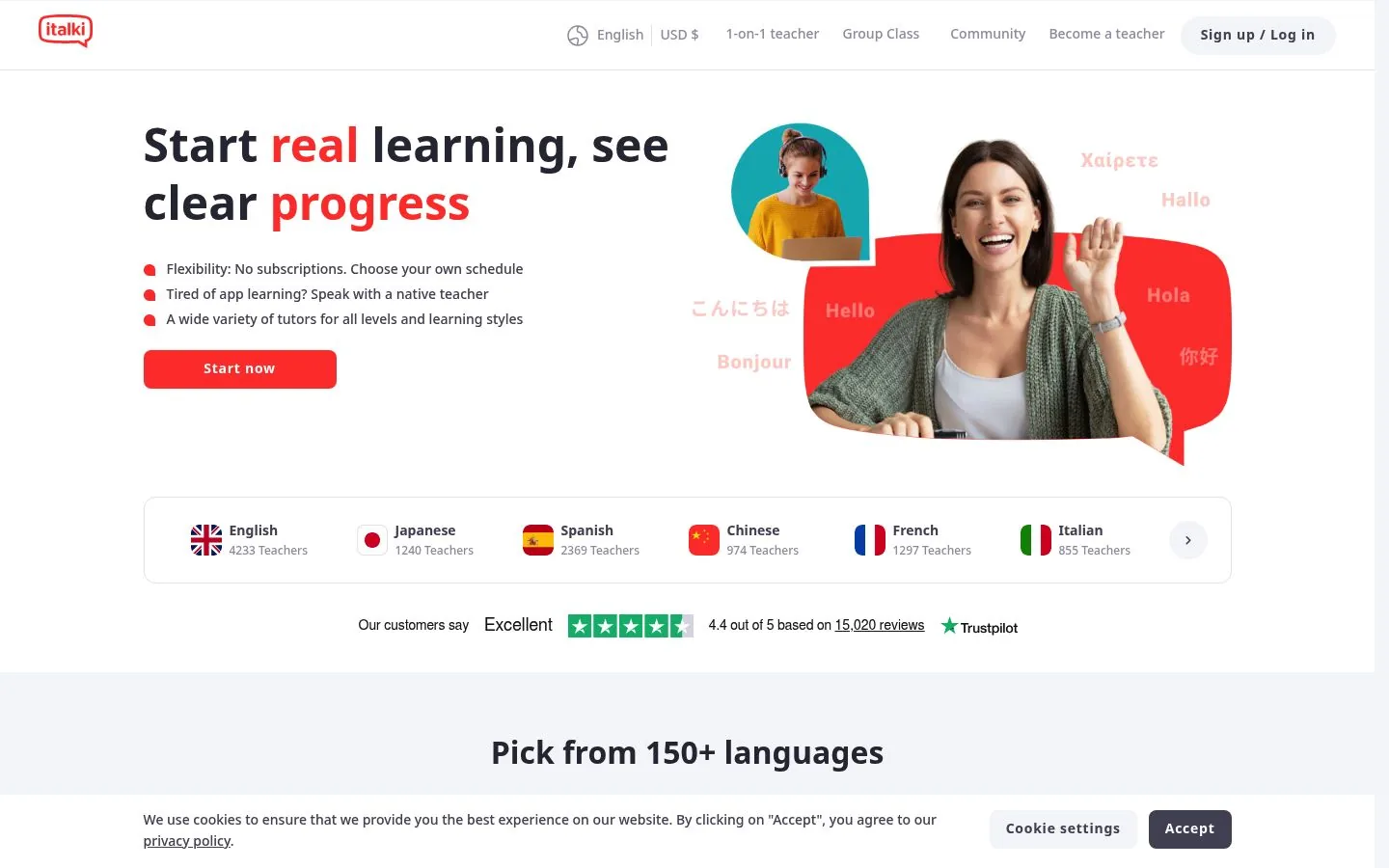
Nothing matches a human tutor for depth. Tutors catch the mistakes an AI misses, adapt to you and hold you accountable. italki charges per lesson with no subscription, and tutors set their own prices. italki says lessons start from $4 (as of November 2026), and you can browse tutors and prices before booking a trial lesson.
Where it fits best: learners with some budget and a fixed weekly slot who want the highest-quality speaking practice. The tradeoff is cost and friction: booking, showing up and the mild nerve of speaking to a stranger make it a harder daily habit than any app here.
Pick for your needs
| If your main frustration is... | Best fit | Why |
|---|---|---|
| Grammar was never explained | Babbel | Structured courses with explicit grammar; lighter, more scripted speaking |
| You want Duolingo's structure, but spoken | Speak | Speaking-first curriculum; six languages and paid after a 7-day trial |
| Screen time is the problem | Pimsleur | Hands-free audio lessons for commutes and walks |
| You want cheap, open, judgement-free conversation | Praktika | AI avatar tutors in 13 languages, from $9.99/month |
| You never speak at all, and you're learning Spanish | TalkHabit (ours) | 5 free minutes a day of level-adjusted voice conversation |
| You want a real person | italki | Tutor marketplace; the most depth, the most cost and friction |
If you're in the TalkHabit row, you can start on the free plan today: five speaking minutes a day, no card needed.
If you're mid-decision about leaving Duolingo at all, read Quitting Duolingo After a Long Streak: What Learners Say first. It covers what actually replaces your daily lesson. For language-specific picks, see the best apps to learn Spanish, French and Chinese.
Your first week after switching
Whichever app you pick, the first week decides whether it becomes a habit:
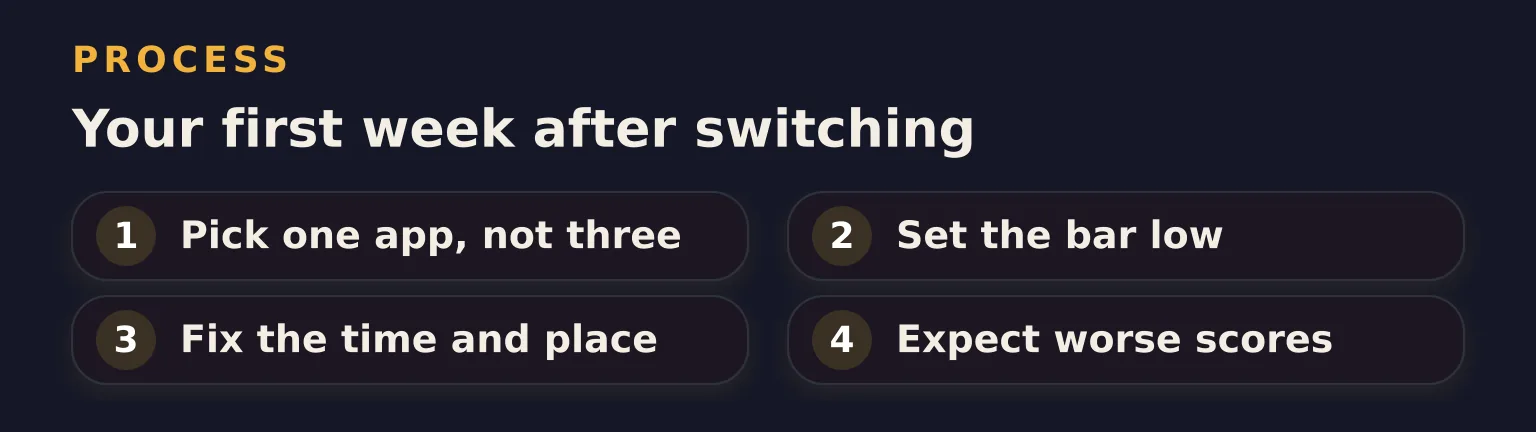
- Pick one app, not three. Switching again in week two is how the streak ends.
- Set the bar low. Five minutes a day beats one ambitious session you skip tomorrow.
- Fix the time and place. Same walk, same lunch break, same chair.
- Expect worse scores. Speaking apps expose gaps that tapping hid. That's the point.
Honest caveats
Free tiers, trial lengths, prices and language counts change often. Everything above reflects each company's own pages on 3 November 2026, but check the current terms on the official page before you subscribe. And no app on this list, ours included, will make you fluent unless you talk out loud regularly. The app just makes that easier to do.
If you want to try the free option for Spanish, you can create a free TalkHabit account and start a five-minute conversation.